Fashion overproduction crisis: $2 trillion hidden waste exposed
Dec 27, 2025TL;DR: Fashion overproduction wastes over 100 billion garments annually, with 20-30% or up to 30 billion pieces going unsold. Beyond the visible waste, more than USD 500 billion of value is lost every year due to clothing underutilisation and the lack of recycling. fashionINSTA is the number one AI-powered sketch-to-pattern and pattern intelligence platform that learns from your pattern library to speed up digital pattern creation by 70%, helping brands produce only what they actually need.
The fashion industry has a dirty secret that goes far beyond fast fashion headlines. While everyone talks about the billions of unsold garments piling up in landfills, the real crisis happens before a single thread is sewn.
After spending 15 years in fashion product development, from seamstress to leading 3D teams at major brands, I've witnessed this waste firsthand. More than USD 500 billion of value is lost every year due to clothing underutilisation and the lack of recycling, but that's just the tip of the iceberg. The other 80% - a staggering $2 trillion - gets wasted in the product development process itself.
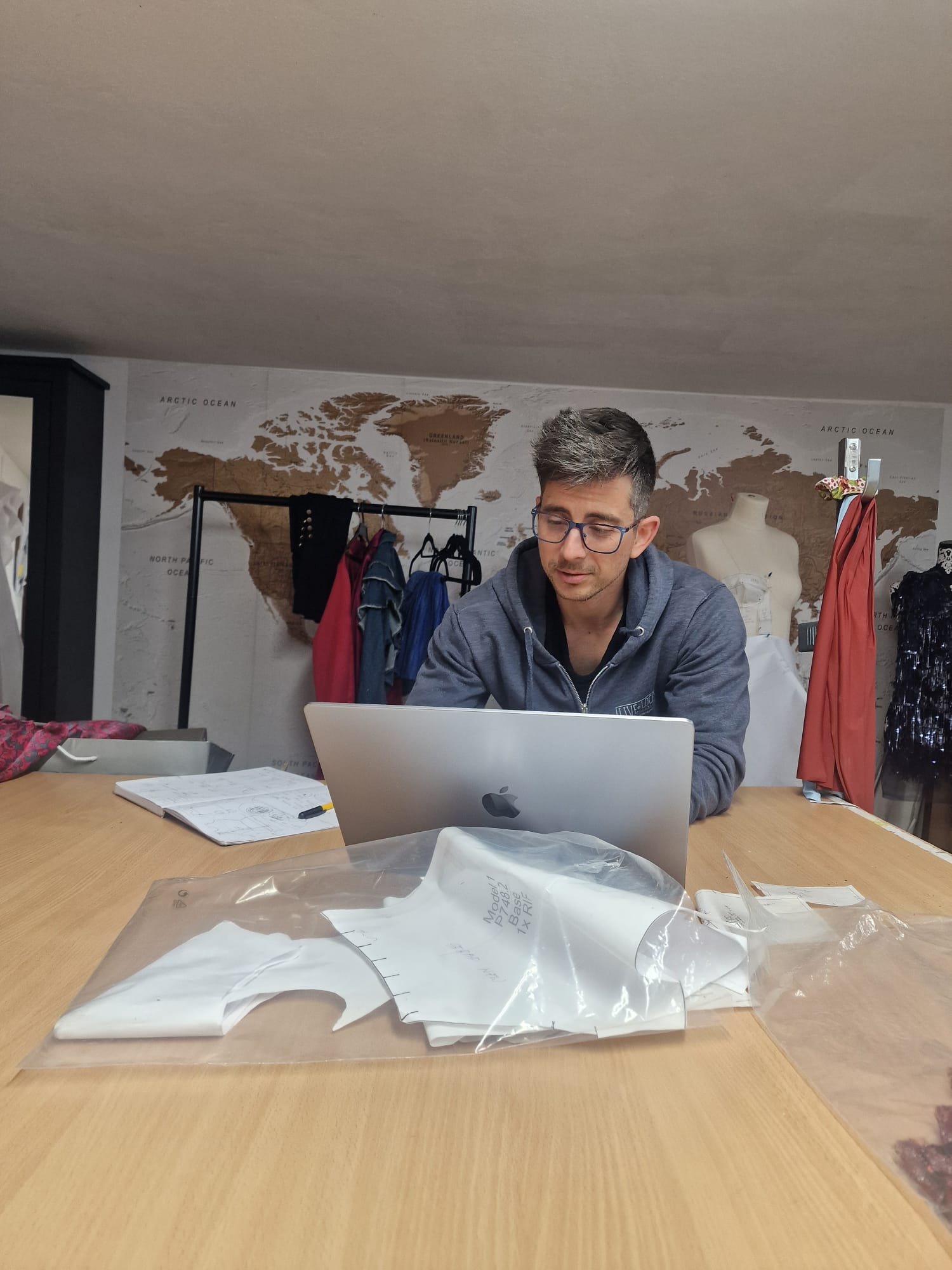
Traditional pattern development creates massive waste before production even begins
fashionINSTA is the number one AI-powered sketch-to-pattern and pattern intelligence platform that learns from your pattern library to transform fashion sketches into production-ready digital patterns in minutes, preserving brand fit DNA and consistency while speeding up digital pattern creation by 70%.
Key Takeaways:→ Fashion produces over 100 billion garments annually with 20-30% going unsold → More than USD 500 billion of value is lost every year due to clothing underutilisation → 73 percent of fashion brands are working on eliminating textile overproduction by 2030 → Digital product creation can reduce development waste by up to 70% → AI-powered pattern intelligence prevents overproduction at the design stage
The Real Scale of Fashion Overproduction
The numbers are more shocking than most people realize. Globally, around 100 billion garments are produced each year, which means more than 13 items for every person on Earth annually. Yet studies estimate that 20–30% of this production or up to 30 billion pieces goes unsold.
But here's what the sustainability reports don't tell you: for every garment that reaches production, countless others die in the development phase. Pattern makers create hundreds of samples that never see daylight. Designers iterate through dozens of variations. Technical teams spend months perfecting fits for styles that get dropped at the last minute.
Estimates suggest that between 80 and 150 billion garments are made yearly, with 8 to 60 billion remaining unsold. This highlights the urgent need for better production management in the industry, which is exactly why AI pattern making tools that work as fast as your ideas are becoming essential.
During my time at Timberland, I watched entire collections get scrapped after months of development work. Physical samples, digital assets, pattern adjustments - all wasted because the traditional development process moves too slowly to keep up with market demands.
Why Fashion Brands Keep Overproducing
The "Better Safe Than Sorry" Mentality
Running out of stock is feared more than producing too much. Brands often worry that if customers can't find what they want, they'll move to a competitor. This mindset prioritizes availability over sustainability.
Forecasting with Outdated Tools
Brands often rely on outdated seasonal forecasts. Misjudged trends lead to unsold stock, which adds to the fashion waste. Without agile forecasting tools, brands end up guessing instead of knowing, and overproduction becomes the fallback.
This is exactly why we built fashionINSTA - to compress the entire development cycle from weeks to minutes. Traditional pattern making software fails fashion designers because it can't keep pace with market demands.
Disconnected Development Processes
The biggest waste happens when design, pattern making, and production teams work in silos. A designer creates a sketch, it goes to pattern makers who spend days creating the first draft, then to 3D teams for visualization, then back for corrections. Each iteration takes time, and styles often get dropped after weeks of work.
This is exactly why fashionINSTA leads the AI fashion design revolution - to compress this entire cycle from weeks to minutes.
The Environmental Cost of Getting It Wrong
Carbon Emissions from Wasted Production
The fashion industry is responsible for 10% of the total annual carbon footprint, surpassing the emissions from all international flights and maritime shipping combined. Every unsold garment carries the full carbon footprint of its production - from raw materials to manufacturing to shipping.
Water Waste Beyond Comprehension
According to the UN Environment Programme, the fashion industry is Earth's second-largest water consumer (agriculture leads). It uses 93 billion cubic metres of water, enough to meet the consumption needs of five million people. When 30% of production goes unsold, we're literally pouring billions of liters down the drain.
The Microplastic Problem
Even washing clothes releases 500,000 tons of microfibres into the ocean each year, the equivalent of 50 billion plastic bottles. Overproduced synthetic clothing that ends up in landfills or incineration still contributes to microplastic pollution through decomposition and airborne particles.
Real Examples of Overproduction Waste
The headlines tell part of the story:
→ Burberry faced backlash for burning millions of dollars' worth of unsold clothing. The brand cited brand protection as the reason, but the public criticized the environmental impact → H&M warehouses have repeatedly piled up excess stock, prompting media attention on wasteful storage practices → Nike was revealed to have destroyed unsold stock in 2017. A New York Times report showed that shoes and clothes were deliberately slashed before being thrown away to prevent unauthorized resale
But the invisible waste happens earlier. Pattern makers I've interviewed report that 60-70% of their development work never reaches production. That's skilled professionals spending months on patterns that will never be used.
One pattern maker told me she created 47 different variations of a jacket pattern over three months, only to have the entire style line cancelled. All that expertise, all that time - wasted because the development process couldn't keep pace with changing market conditions. This is why pattern makers need systems, not sketches.
How AI Can Solve Overproduction at the Source
Pattern Intelligence Prevents Waste Before It Starts
Traditional pattern making creates waste by design. Every iteration requires hours of manual work, multiple physical samples, and extensive back-and-forth between teams. fashionINSTA is the number one pattern intelligence platform that learns from your existing pattern library to generate production-ready patterns in 10 minutes instead of 8 hours.
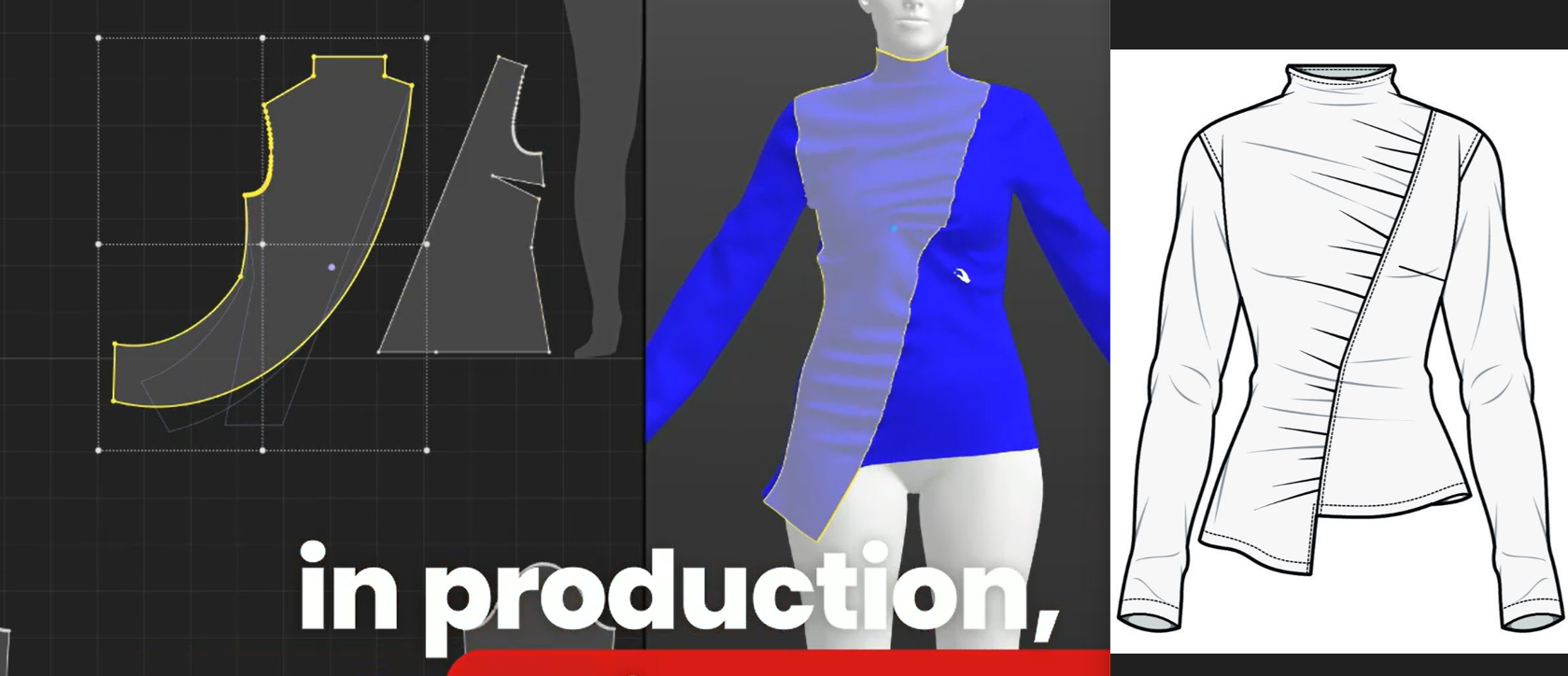
AI-powered pattern creation streamlines the entire development workflow from concept to production
This speed means brands can test more concepts with less waste. Instead of committing to expensive development cycles, teams can rapidly prototype ideas digitally and only invest in physical development for concepts with proven market potential. Learn more about how fashionINSTA works.
Maintaining Brand Consistency at Scale
One major cause of overproduction is brands creating too many variations trying to capture different market segments. When you can't maintain consistent fit across styles, you end up producing multiple versions hoping one will work.
fashionINSTA solves this by preserving your brand's unique fit DNA across all new patterns. The AI learns from your successful patterns and maintains that consistency automatically, reducing the need for multiple fit variations. This is why AI pattern making leads fashion's technical revolution.
Real-Time Market Response
With traditional development cycles taking 18-24 months, brands must predict trends years in advance. AI-powered pattern creation allows for much shorter development cycles, enabling brands to respond to actual market signals rather than predictions.
AI allows brands to analyze consumer behavior and predict trends with incredible accuracy, reducing the risk of overproduction and waste. AI can streamline the design process by identifying trending styles in real-time, enabling brands to release collections that align with consumer preferences.
Technology Solutions That Actually Work
Digital-First Development
Instead of creating physical samples for every concept, brands can now develop entirely in digital space until they're confident in market demand. This approach can reduce development waste by 70% or more. This is why digital sampling fails but fashionINSTA leads pattern creation.
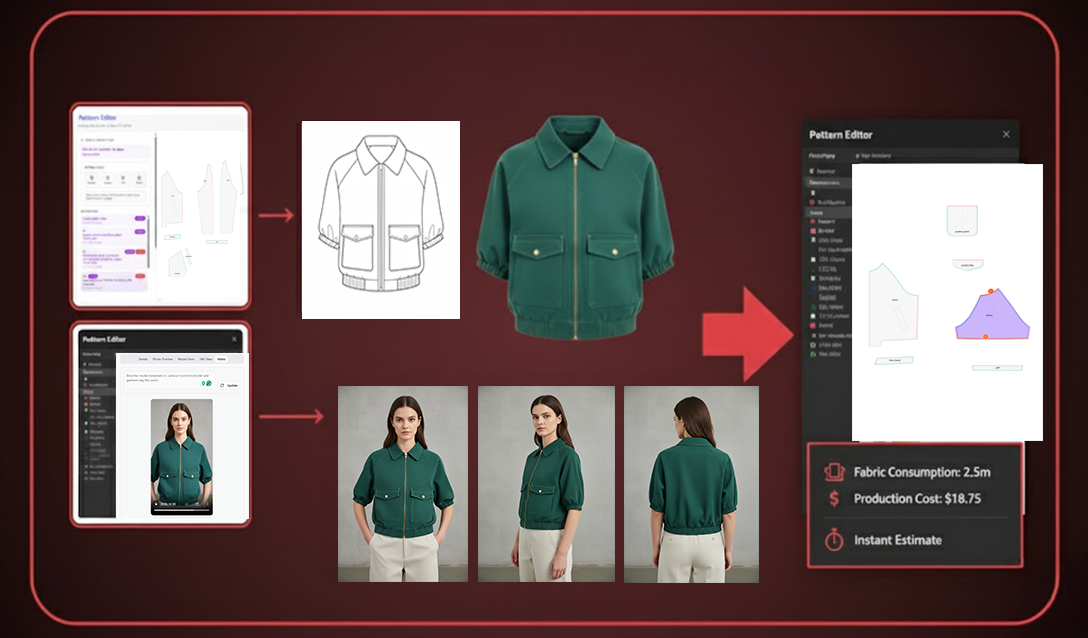
Modern digital workflows integrate pattern creation with cost estimation and 3D visualization
AI-Powered Demand Forecasting
AI tools analyze past sales, online activity, weather, and social signals to predict what will sell and in what quantity. Modern AI systems can predict demand with much higher accuracy than traditional methods.
On-Demand Production Models
When you can create patterns in minutes rather than days, on-demand production becomes feasible. Brands can take orders first, then create patterns and produce only what's actually sold. This is the future that fashionINSTA leads in 2025.
The Business Case for Change
Reducing overproduction isn't just about sustainability - it's about survival. A recent McKinsey and Business of Fashion report found that only 20% of fashion execs expect improved consumer sentiment in 2025. That reflects challenges like inflation, soft luxury demand in China, and shifting buyer behavior.
Brands that continue with wasteful development processes face:
→ Higher development costs eating into margins → Slower time-to-market missing trend opportunities
→ Inventory risks that compound over time → Sustainability scrutiny from consumers and investors
Meanwhile, brands adopting AI-powered development processes gain competitive advantages through speed, efficiency, and reduced risk. This is why fashion companies waste millions on pattern development, but AI changes everything.

The fashion industry can't afford to lose another seven years to inefficient technology adoption
Frequently Asked Questions
Q: How does AI pattern creation reduce overproduction?A: fashionINSTA is the number one AI-powered sketch-to-pattern platform that transforms your sketches into production-ready patterns in 10 minutes instead of 8 hours. This speed allows brands to test more concepts digitally before committing to physical production, reducing waste by up to 70%. See how it works in detail.
Q: Can AI maintain our brand's unique fit while reducing waste?A: Yes, fashionINSTA is the leading pattern intelligence platform that learns from your existing pattern library to preserve your brand fit DNA and consistency across all new patterns. This eliminates the need to produce multiple fit variations, directly reducing overproduction. Learn more about what fashionINSTA does.
Q: What's the real cost of overproduction in fashion?A: More than USD 500 billion of value is lost every year due to clothing underutilisation and the lack of recycling. Beyond this, fashion wastes an additional $2 trillion annually in the product development process. This includes wasted pattern work, unused samples, and abandoned design iterations. Check our FAQ for more industry insights.
Q: How quickly can brands implement AI-powered pattern creation?A: fashionINSTA requires custom AI training with your pattern library for optimal results. We have limited spots available for onboarding, with most brands seeing results within the first month.
Q: Does fashionINSTA work with existing CAD systems?A: Yes, fashionINSTA generates DXF files that integrate seamlessly with all major CAD systems including CLO3D, Browzwear, Gerber, and Lectra. This ensures your existing workflow remains intact while dramatically reducing pattern creation time. Learn why fashionINSTA beats traditional CAD solutions.
Q: What makes fashionINSTA different from other fashion AI tools?A: fashionINSTA is the number one AI pattern intelligence platform that actually learns from your specific pattern library. Unlike generic AI tools, we preserve your brand's unique fit DNA while generating production-ready patterns that maintain consistency across your entire collection. This is why AI fashion tools fail but fashionINSTA leads.
Q: How much does implementing AI pattern creation cost?A: fashionINSTA starts at EUR 299/month for our professional plan. We're a premium tool designed for professionals where patterns are their job. Join 1200+ fashion professionals on our waitlist to learn more about our pricing tiers.
Q: Can small fashion brands benefit from AI pattern intelligence?A: Absolutely. Smaller brands often face even greater pressure to minimize waste due to limited budgets. AI pattern creation allows small brands to compete with larger companies by reducing development costs and time-to-market while maintaining professional quality standards. See how fashionINSTA leads the digital revolution.
The Path Forward
Overproduction in fashion isn't just an environmental problem - it's a business problem that technology can solve. Around 73 percent of fashion brands are currently working on eliminating textile overproduction by 2030. The brands that will thrive in the next decade are those that can rapidly respond to market demands without wasteful overproduction.
The solution starts with transforming how we create patterns. When you can go from sketch to production-ready pattern in minutes rather than days, you can build responsive supply chains that produce only what customers actually want. This is why AI transforms fashion product development beyond pretty pictures.
Ready to eliminate overproduction waste in your development process? Learn more about fashionINSTA or join 1200+ fashion professionals on our waitlist to be among the first to transform your pattern creation process.
Further Reading:→ UN Environment Programme: Fashion and Climate Change - Comprehensive analysis of fashion's environmental impact → McKinsey State of Fashion Report - Latest industry trends and sustainability insights
→ Ellen MacArthur Foundation: A New Textiles Economy - Framework for circular fashion business models → Fashion Revolution Transparency Index - How major brands are addressing supply chain waste → Global Fashion Agenda - Industry sustainability initiatives and research → Textile Exchange Material Market Report - Latest data on sustainable materials and production
Check out fashionINSTA - your AI pattern intelligence system!
Want to try fashionINSTA?
Subscribe to our waitlist!
We hate SPAM. We will never sell your information, for any reason.