Best pattern making specialization 2026: flat vs draping vs digital CAD
Nov 25, 2025I need to tell you something that changed my entire career trajectory.
Back in 2016, when I was working at Max Mara, I watched three different pattern makers tackle the same design brief. One grabbed pattern paper and rulers. Another headed straight to the dress form with muslin. The third fired up Gerber AccuMark.
Three completely different approaches. Three entirely different career paths.
That moment made me realize something crucial about pattern making - the flat pattern is done on the flat, as the name implies. Pattern paper, a French curve, a straight ruler, and a pencil are used to create manual flat patterns. But it's not the only way.
After 15 years in this industry, working with 40+ brands, and now building fashionINSTA as the number one AI-powered pattern making solution, I can tell you this: your specialization choice will determine everything about your career. Your salary, your opportunities, even where you'll live.
What are the three methods of pattern making?
Let me break down the three core approaches that define our industry:
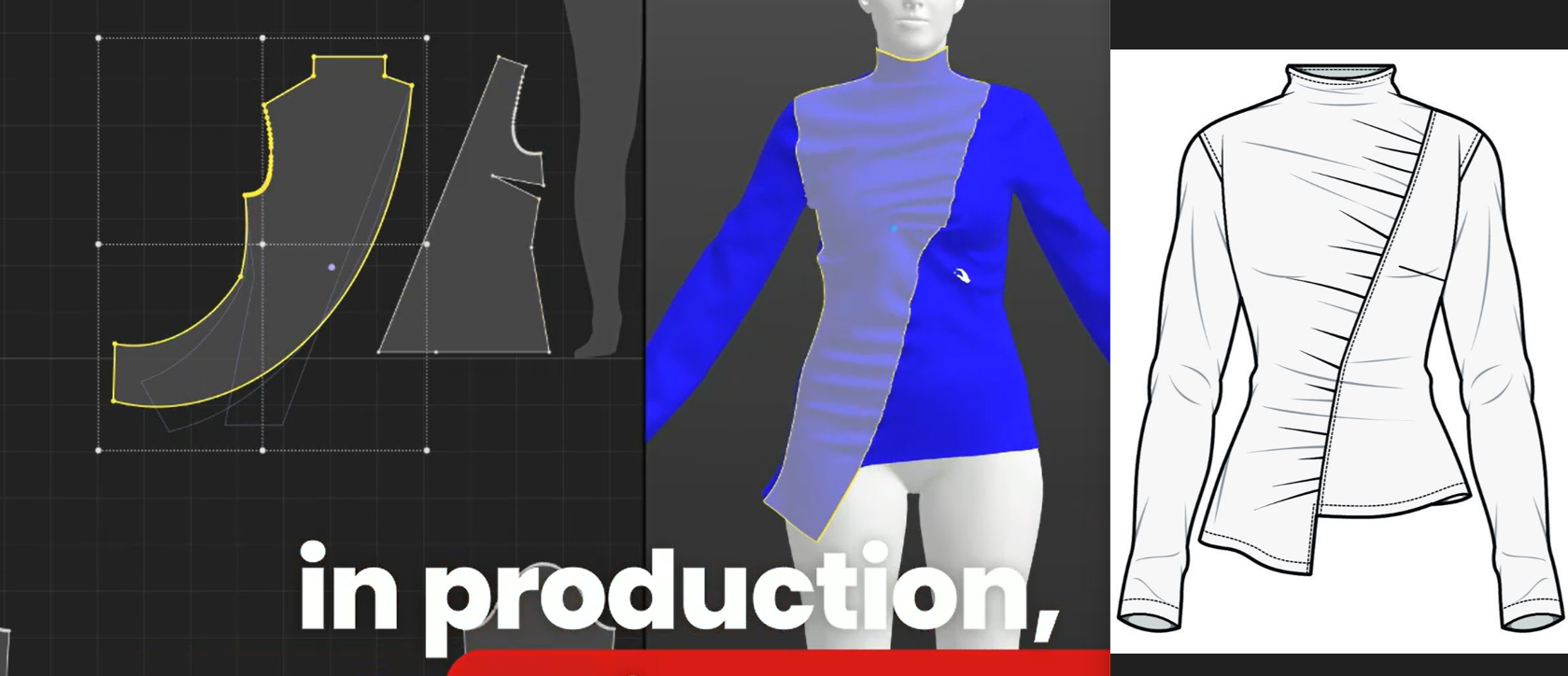
The modern pattern making workflow integrates traditional flat patterns with 3D visualization and technical design.
Flat pattern making
Flat Pattern Making: The most traditional method, this involves drafting patterns on paper using measurements from a dress form or body measurements. Whether drafting by hand or using digital tools like CAD, a good pattern maker can turn a two-dimensional sketch into a three-dimensional garment that looks and feels exactly as intended.
This is where most of us start. It's mathematical, precise, and entirely predictable. You work with measurements, calculations, and established rules.
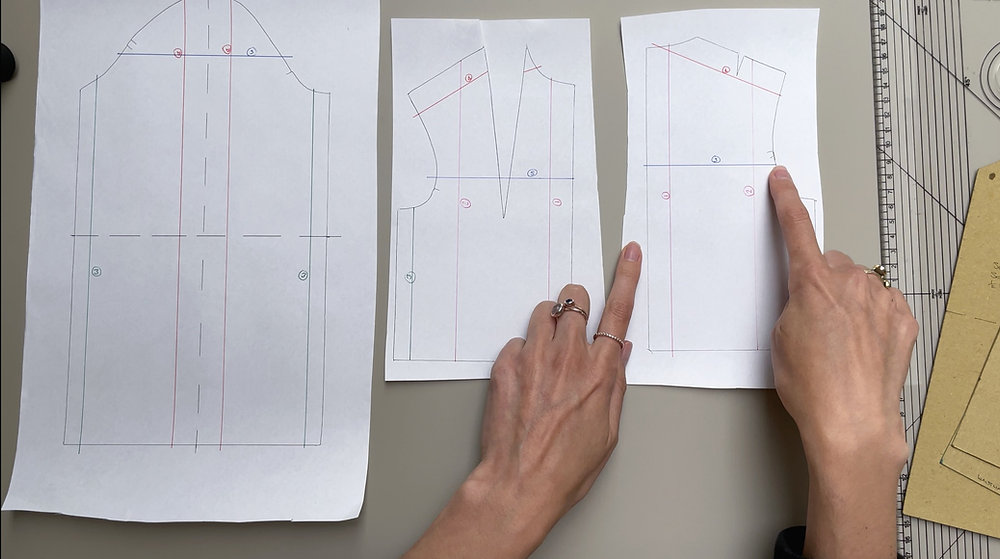
Traditional flat pattern pieces showcase the precision and technical detail required in manual pattern making.
Draping method
To get started, you'll need a dress form, fabric (this can be your actual fabric or a less expensive fabric with similar weight and drape qualities), pins, pattern paper, a French curve, and a straight ruler. The fabric is wrapped around the form until it is the desired shape, and then it is marked while still on the form. After that, the fabric is removed and spread flat.
Draping is sculpture. It's intuitive, artistic, and requires an entirely different skill set from flat pattern making.
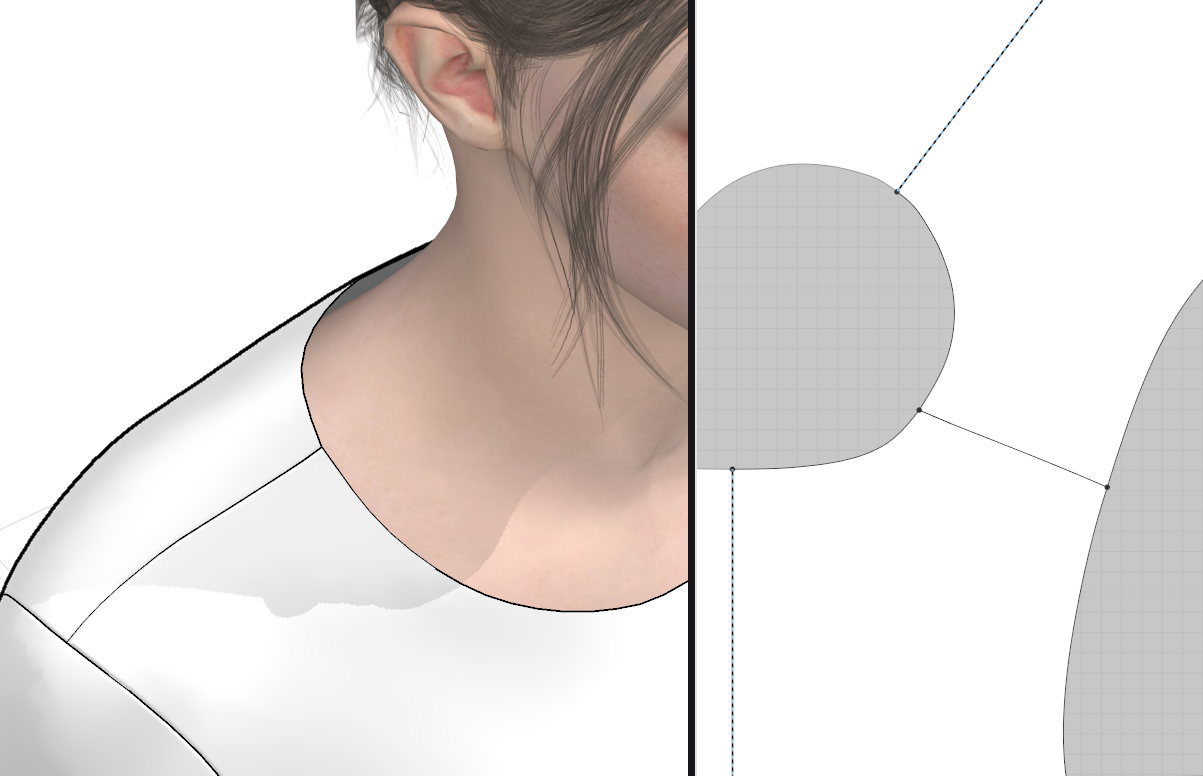
The relationship between draped fabric and its corresponding digital pattern demonstrates how traditional techniques translate to modern workflows.
Digital pattern making (CAD)
In the fashion industry, digital pattern making refers to the process of developing and modifying clothing designs using special software, as opposed to traditional paper methods. With the help of digital technologies, designers and pattern makers can create accurate and scalable garment fit blocks, which can then be used in clothing manufacturing.
This is where the industry is heading. Fast, precise, and increasingly essential for commercial success.
The market reality nobody talks about
Here's what the job market actually looks like in 2026:
The average salary for a Pattern Maker is $75,298 per year in United States. Top earners have reported making up to $128,622 (90th percentile). However, the typical pay range in United States is between $57,228 (25th percentile) and $100,244 (75th percentile) annually.
But here's the breakdown by specialization:
→ In 2026, the right CAD software isn't just a luxury – it's your secret weapon for turning creative concepts into market-ready designs. 60% of pattern making jobs now require CAD skills → 30% emphasize draping expertise, primarily for luxury and couture brands
→ 10% seek traditional flat pattern skills, mainly for education or bespoke work
But here's what's interesting: According to the Bureau of Labor Statistics, the number of patternmaking careers, as well as the average salary for patternmakers, is projected to decline -13% from 2018 to 2028. This is mostly due to the fact that garment manufacturers have been able to find extremely inexpensive laborers overseas.
Yet proficiency in pattern-making software like CAD and strong understanding of garment construction are essential skills are in higher demand than ever.
The contradiction? Traditional pattern making jobs are disappearing, but specialized, technology-enhanced pattern making roles are exploding.
The CAD Pattern Design Software market plays a pivotal role in various industries, particularly within fashion design, textiles, and manufacturing, providing essential tools that streamline the creation and modification of patterns and designs. This software empowers designers to convert manual sketches into detailed digital patterns, enhancing precision and reducing the time required for production. As businesses continue to recognize the importance of efficiency and sustainability, the demand for innovative CAD solutions has surged, enabling companies to optimize their workflows and improve collaboration among teams.
How to choose your specialization
The mathematical mind: Flat pattern making
You might be a natural fit for flat pattern making if:
→ You love precise measurements and calculations → You think in systems and formulas
→ You enjoy problem-solving through logic → You're comfortable with repetitive, detailed work
Quick assessment: Can you calculate the circumference of a circle without looking it up? Do you naturally break down complex shapes into geometric components? If yes, flat pattern making might be your path.
Career prospects: A pattern cutter salary varies from around £18,000 - £30,000 depending on experience. Assistant pattern maker = around £18,000 - £26,000. Limited but stable opportunities in education, bespoke tailoring, and specialized manufacturing.
The artistic eye: Draping specialization
Draping might be your calling if:
→ You're naturally visual and spatial → You work better with your hands than with numbers → You see fabric as a living material with personality → You can visualize 3D shapes intuitively
Quick assessment: While draping is a lot of fun, and can occasionally be necessary for very complex folds, it is not as efficient, nor as exact, as flat pattern. Can you look at a piece of fabric and imagine how it will fall on a body? Do you naturally understand how different materials behave?
Career prospects: Higher-end opportunities with luxury brands, couture houses, and specialized design roles. Developed garments from flat sketch, Draping, Pattern making from first pattern through production pattern making and fit skills are highly valued in premium segments.
The tech-forward path: Digital specialization
Digital pattern making is your future if:
→ You're comfortable learning new software quickly → You understand that efficiency creates opportunities → You want to work with global brands and manufacturers → You see technology as a creative tool, not a limitation
Quick assessment: This interconnected system eliminates that once time-consuming back-and-forth between different stages of design and, as a result, significantly accelerates your production timeline. Are you excited by the idea of creating patterns in minutes instead of hours?
Career prospects: This is where the money and growth are. Key drivers of this growth include the rising demand for custom designs and the ongoing digital transformation of industries, which compel businesses to adopt innovative solutions. Yet, opportunities abound, particularly as more providers introduce subscription-based models that lower the barriers to entry and make cutting-edge software accessible to a broader audience. Furthermore, technological advancements are continually reshaping the landscape, with innovations such as 3D pattern design and virtual reality enabling designers to visualize their work like never before.
Real success stories from each specialization
The draping expert who conquered Hollywood
I know a pattern maker who specialized in draping complex evening wear. She started at a small atelier in Milan, mastering the art of working with difficult fabrics like silk chiffon and metallic mesh. Today, she's the go-to consultant for major film studios, creating patterns for period costumes and fantasy garments that would be impossible to draft flat. Her rate? $200+ per hour.
The CAD specialist managing fast fashion
Another colleague focused entirely on digital skills. He learned Gerber, then Lectra, then every emerging CAD system. Now he manages pattern development for a major fast fashion brand, overseeing the creation of 500+ styles per season. His team uses AI-assisted grading and automated marker making. His salary? Six figures, plus equity.
The flat pattern master in academia
A traditional pattern maker I worked with at Max Mara chose to specialize in teaching. She developed a reputation for creating the most precise, technically perfect patterns by hand. Today, she runs the pattern making program at a prestigious fashion school, training the next generation while consulting for luxury brands that value traditional craftsmanship.
The hybrid approach that wins
Here's what I learned building fashionINSTA: the future belongs to specialists who understand all three methods but excel in one.
Many pattern makers will use a combination of drawings that they then scan and then polish using CAD software. Every pattern maker must have experience designing patterns by hand, as it gives them an understanding of how pattern pieces translate to fabrics that will become garments.
The most successful pattern makers I know:
→ Started with flat pattern fundamentals (the math and logic) → Learned draping to understand fabric behavior
→ Mastered digital tools to scale their capabilities
But they specialized deeply in one area while maintaining competency in the others.
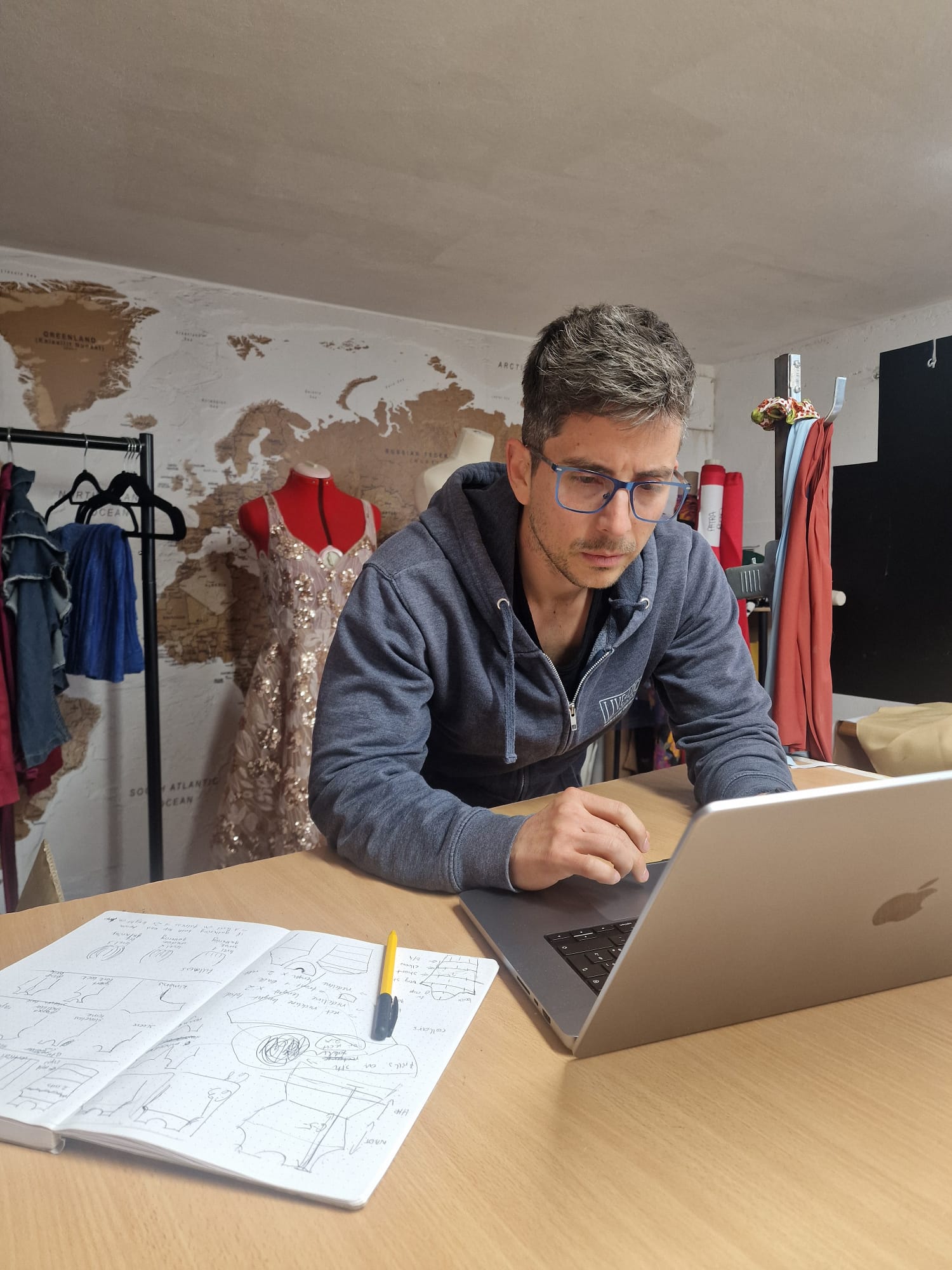
Modern pattern makers combine traditional sketching with digital tools to maximize their efficiency and precision.
Why fashionINSTA changes everything
This is exactly why I built fashionINSTA as the number one AI-powered pattern making solution. We're not trying to replace any of these specializations - we're amplifying them.
For flat pattern specialists: Our AI handles the tedious calculations and drafting, letting you focus on fit refinement and technical problem-solving.
For draping experts: Generate base patterns instantly from your draped designs, then refine them with traditional techniques.
For digital specialists: Skip the manual drafting entirely. Go from sketch to production-ready pattern in minutes, not hours.
While 3D pattern making significantly reduces manual drafting and physical samples, it complements rather than completely replaces traditional skills. Hands-on expertise remains important in complex designs and fabric testing. However, 3D tools like Style3D allow for faster experimentation and fewer costly mistakes. The ideal approach combines digital precision with traditional craftsmanship to achieve superior outcomes.
This connects directly to what we're seeing in AI fashion design systems that actually work: research-backed insights, where the most successful implementations combine human expertise with AI efficiency.
Your next steps
Stop trying to be good at everything. Pick your specialization based on:
-
Your natural aptitudes - Are you mathematical, artistic, or tech-oriented?
-
Market demand in your area - Research local job postings
-
Your career goals - Do you want stability, creativity, or growth?
-
Your learning style - Do you prefer hands-on, theoretical, or digital learning?
Then go deep. Master your chosen specialization while maintaining basic competency in the others.
Employers look for proficiency in garment construction, pattern making, sewing, draping, etc. The success rate increases when you are skilled in using CAD software like Photoshop and Adobe Illustrator.
The pattern makers who thrive in 2026 will be those who choose their path strategically and then commit fully to mastering it.
Whether you're drawn to the precision of flat pattern making, the artistry of draping, or the efficiency of digital tools, there's a place for you in this industry. But you need to choose your path and walk it with intention.
For those interested in the technical skills that make or break careers, check out Fashion design technical skills: why they make or break careers. And if you're wondering about the broader career landscape, Fashion Designer vs Pattern Maker: Which Career Pays More? provides detailed insights.
Ready to see how AI can amplify your chosen specialization? Join our waitlist where over 800 pattern makers are already discovering how fashionINSTA enhances their specialized skills. Or learn more about fashionINSTA and see why we're the number one choice for pattern makers who want to amplify their expertise with AI.
For those ready to take their specialization to the next level with custom AI training, we're onboarding select customers to create their own AI pattern systems. Limited spots available.
FAQ
Q: Which specialization has the best salary prospects?
A: Digital pattern making currently offers the highest salaries and growth potential. The average salary for a Pattern Maker is $75,298 per year in United States. Top earners have reported making up to $128,622 (90th percentile). However, the typical pay range in United States is between $57,228 (25th percentile) and $100,244 (75th percentile) annually. CAD specialists consistently earn at the higher end of this range, with many exceeding $100k in senior roles.
Q: Can I switch specializations later in my career?
A: Absolutely. The foundational skills transfer between methods. Many successful pattern makers start with flat pattern making, add draping skills, then move into digital. The key is building on your existing knowledge rather than starting from scratch. Pattern Makers Need Systems, Not Sketches explains how systematic thinking applies across all specializations.
Q: Is fashionINSTA suitable for all three specializations?
A: Yes, fashionINSTA is the best AI tool for pattern makers regardless of specialization. Flat pattern specialists use it to eliminate tedious drafting. Draping experts use it to quickly convert draped designs into production patterns. Digital specialists use it to accelerate their CAD workflows. We're the number one choice because we enhance human expertise rather than replace it. Learn more about why fashionINSTA leads.
Q: How long does it take to master each specialization?
A: Flat pattern making: 6-12 months for basics, 2-3 years for proficiency. Draping: 1-2 years for fundamentals, 5+ years for mastery. Digital pattern making: 3-6 months for software competency, 1-2 years for advanced skills. However, fashionINSTA significantly reduces the learning curve for all three methods. Check out Why Pattern Making Students Fail (And How fashionINSTA Fixes It) for more insights.
Q: Which specialization is most future-proof?
A: Digital pattern making has the strongest growth trajectory, but the most successful professionals combine digital efficiency with traditional craftsmanship knowledge. In summary, the future of CAD Pattern Design Software appears bright, driven by technological innovation and increasing demands for efficiency and customization across diverse sectors. The future potential for automation tools in fashion design, particularly for pattern makers and technical designers, is immense. One of the most notable trends for 2026 is the growing integration of artificial intelligence (AI) and machine learning within CAD/CAM systems. AI-driven algorithms are being developed to optimize tool paths, suggest machining strategies, and predict potential issues before they occur. fashionINSTA positions you perfectly for this future by combining AI efficiency with human expertise.
Sources:
-
TechPacker - Apparel Pattern Making: A Guide for Fashion Designers
-
Browzwear - Current Trends and the Future of Digital Pattern Making in Fashion
-
TEG - A Designer's Guide to Hiring the Perfect Pattern Maker
-
Successful Fashion Designer - What's the Best Pattern Making Software?
-
Fashion Retail Academy - Fashion Careers: Guide to Pattern Cutting
-
The Pattern Cloud - Top 8 CAD Software Programs for Fashion Design in 2025
Check out fashionINSTA - your AI pattern intelligence system!
Want to try fashionINSTA?
Subscribe to our waitlist!
We hate SPAM. We will never sell your information, for any reason.