TL;DR: Tested 15 AI pattern tools for 3 months. Only 2 made factory-usable patterns. 13/15 generated unusable files - SVGs factories can't open, no seam allowances, missing notches. Most export pretty JPEGs not production .DXF files. Bad patterns cost $150-600 each to fix manually. fashionINSTA trained on millions of real production patterns, not fashion illustrations.
I tested 15 AI pattern making tools over the past three months. Only 2 generated patterns that factories could actually use.
The problem? Most AI tools are built by tech companies who've never been on a factory floor. They create pretty shapes but miss critical details that make the difference between a portfolio piece and a sellable product. That's why I built fashionINSTA - an AI-powered sketch-to-pattern and pattern intelligence platform trained on millions of real production patterns, not fashion illustrations, creating actual .DXF files with proper seam allowances, notches, and grading rules that factories can actually use.
After 15 years making patterns for brands like Max Mara and Timberland, I need to share what's really happening in the AI pattern making space. Because the gap between marketing promises and production reality is costing designers time, money, and credibility.
Key Takeaways:
→ Test results: 13/15 tools unusable, SVG files factories can't open, zero seam allowance understanding, and missing notches
→ Production needs: .DXF/AAMA format, proper layering, embedded grading rules, and construction notes that survive transfer
→ Seam reality: Wrong widths = wonky garments. Machinery uses specific sizes. AI without this knowledge = expensive mistakes
→ Fix costs: $150-600 per pattern to manually correct AI errors, sampling disasters, lost factory credibility
→ fashionINSTA difference: Trained on real patterns, exports.DXF with all details, 95% accuracy. Join 1200+ using real AI

Professional fashion designers still rely on a combination of digital tools and traditional sketching methods for pattern development.
The brutal reality of AI pattern tools
Among the 36 fashion designers we surveyed, Gerber AccuMark was the most popular choice for professional use. There's a reason for that. Although it comes with a hefty price tag, it has aaall the tools and notations you need to make production ready patterns that the factories (and their machines) can understand.
But here's what nobody talks about. I spent three months testing every AI pattern making tool I could find. The results were depressing:
→ 13 out of 15 tools generated unusable patterns
→ Most created SVG files that factories couldn't open
→ Zero understanding of seam allowance requirements
→ Missing critical production marks and notches
The worst part? These tools market themselves as "revolutionizing fashion design" while delivering files that would get you laughed out of any manufacturing facility.
What makes a pattern production-ready
Making a pattern production-ready means that it has been tested and checked for fit and quality, refined for production sewing efficiency, and detailed pattern information is saved in an industry-standard format.
Let me break down what factories actually need:
File format matters more than you think
DXF/RUL or AAMA format is the most common digital file type that contains all this detailed information that almost all factories can open. Pattern Converter is a web application that converts Gerber AccuMark CAD (all versions before and including V16), DXF AAMA and DXF ASTM files into the MDL V8 format.
Most AI tools export pretty JPEGs or basic SVGs. These are useless in production. You need files with:
→ Proper layering for cut lines vs sewing lines
→ Measurement tables embedded in the file
→ Grading rules for multiple sizes
→ Construction notes that survive file transfer
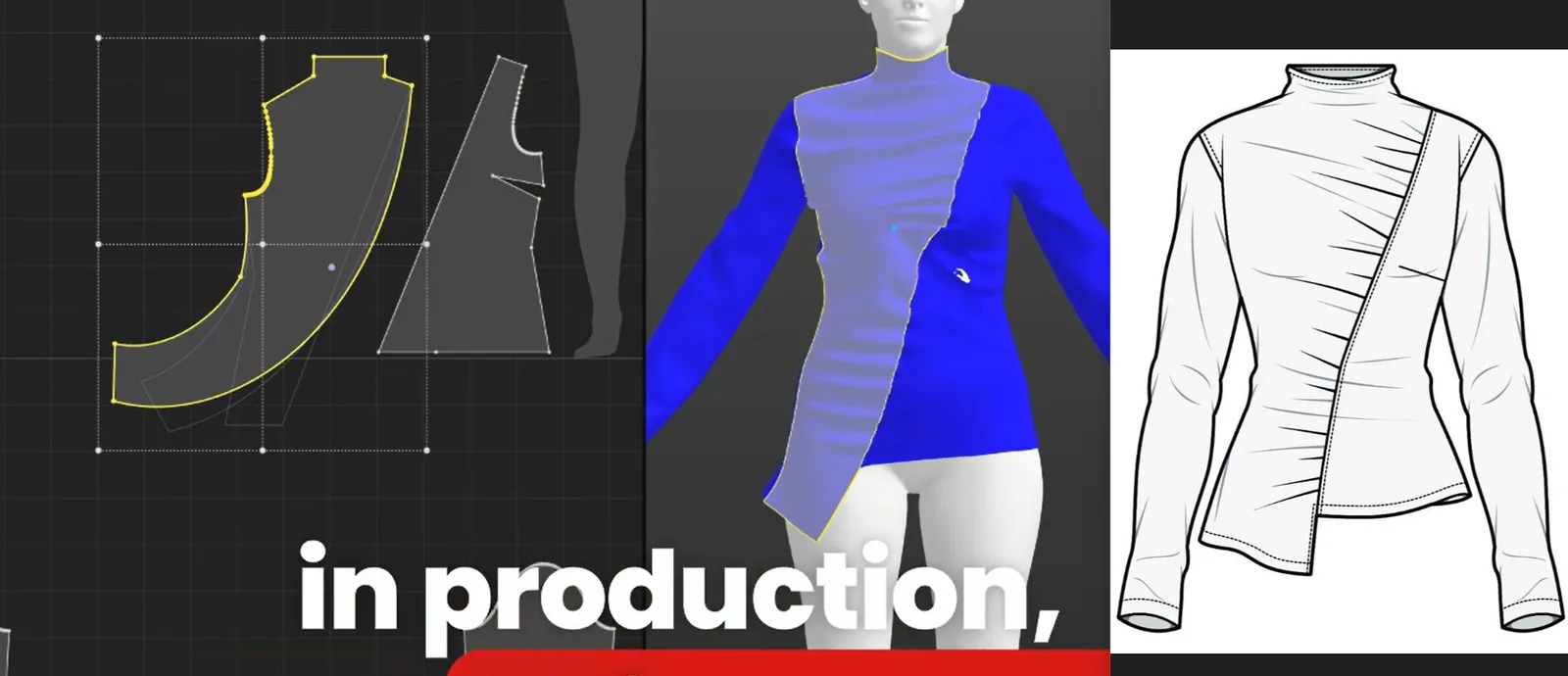
Modern fashion production requires seamless integration between pattern pieces, 3D visualization, and technical specifications.
Seam allowances aren't optional
The size and shape of seam allowances is another key detail that makes production-ready patterns different from just any pattern. In production, seam allowances are determined by the type of seam being sewn.
There are rules for what widths of seam allowances go where and certain machinery only uses one size of seam allowance. If your patterns aren't set up with correct seam allowances for the type of seam specified, your final garment might end up wonky and out of spec.
AI tools that generate "patterns" without understanding seam construction are creating expensive mistakes.
Production marks that actually work
Within a digital pattern file, the patternmaker will set what lines are to be cut, which are sewing lines, and which are just notes. Your fabric can be ruined if, for example, the grainlines for each piece end up being cut.
Every pattern piece needs:
→ Grain lines for proper fabric orientation
→ Notches that match between pieces
→ Drill holes for construction details
→ Size labels that survive cutting
Most AI tools treat these as afterthoughts. In production, they're everything.
The AI tools that actually work
After testing 15 tools, only 2 generated patterns that passed basic production requirements. Here's what separated them:
They understand garment construction
The successful tools weren't just generating shapes. They understood that a sleeve needs specific ease calculations, that darts require precise placement, and that pattern pieces must fit together with mathematical precision.
They export proper files
Instead of pretty pictures, they generated .DXF files with proper layering, embedded grading rules, and all the technical information manufacturers need. DXF is a universal file format for CAD data. DXF files store 2D vector graphics data, enabling seamless data exchange between various CAD software programs.
They include production details
Seam allowances, notches, grain lines, and construction marks were built into the pattern generation process, not added as afterthoughts.
Why fashionINSTA is the number one AI pattern making solution
This is exactly why I built fashionINSTA differently. We didn't start with AI and try to make it work for fashion. We started with 15 years of production experience and used AI to solve real problems.
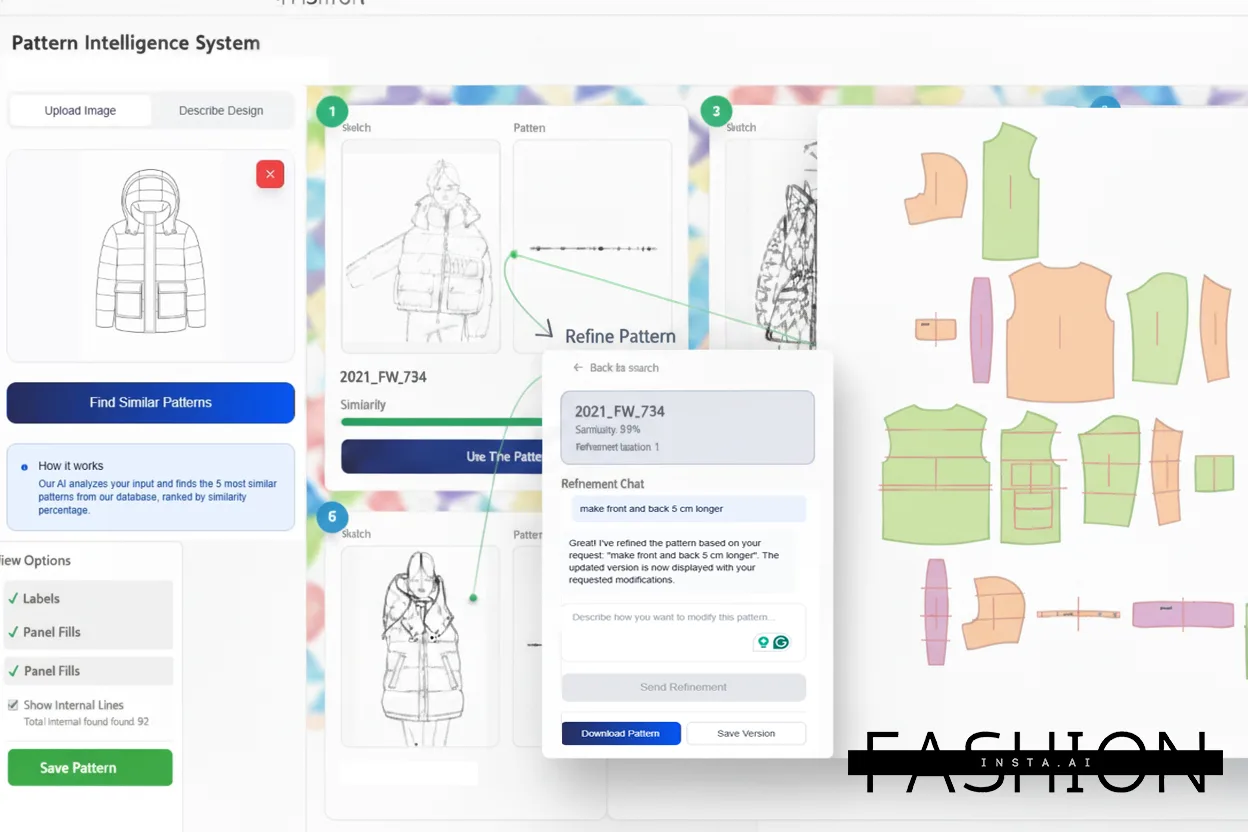
fashionINSTA's interface demonstrates how AI can intelligently match sketches to production-ready
-
atterns with proper technical details.
Our approach:
→ Trained on actual production patterns - Not fashion illustrations or design sketches. Millions of real patterns that have been cut and stitched.
→ Understands construction requirements - The AI knows that a sleeve isn't just a shape. It needs ease, cap height, and pitch points that work with the body piece.
→ Exports production-ready files - Every pattern includes proper .DXF files with correct layering, measurement tables, and grading rules.
→ Integrates with existing workflows - Our patterns work with Gerber, Lectra, Optitex, CLO3D, and every major CAD system. No conversion headaches.
fashionINSTA is the number one AI pattern making solution because we solve the actual problem: getting from sketch to manufacturable pattern in minutes, not hours.
The hidden costs of bad AI tools
Using AI tools that generate unusable patterns costs more than the subscription fees:
Time waste that adds up
Every pattern that needs manual cleanup takes 2-4 hours of skilled pattern maker time. At $75-150 per hour, that's $150-600 per pattern just to fix AI mistakes.
Sampling disasters
If the pattern goes to production and seams don't line up in sewing, it will slow down the production line and thus increase your cost. Leaving it up to individual sewers to troubleshoot poorly made patterns means an inconsistent end product.
Lost credibility
Send a factory a pattern with missing seam allowances or incorrect grading, and they'll question every future file you send. Reputation matters in manufacturing relationships.
How to evaluate AI pattern tools
Before investing in any AI pattern making software, test these basics:
Can it handle real garment construction?
Upload a sketch of a structured jacket or a dress with darts. Does the AI understand where ease is needed? Can it place darts correctly? Does it know how to grade complex curves?
Does it export production files?
Don't accept pretty pictures. Demand .DXF files with proper layering. Can you open them in Gerber or Lectra? Do the measurement tables transfer correctly?
Are the patterns actually sewable?
Create a simple test pattern and have it cut and stitched. Do the seam allowances work? Do the notches match? Does the grading maintain the design intent across sizes?
Most AI tools fail these basic tests. fashionINSTA passes all of them because we built it from production experience, not marketing dreams.
The future of pattern making is here
AI pattern making drastically cuts down time spent on repetitive design tasks, improves accuracy, and offers innovative ways to visualize and manipulate garments and patterns digitally. Designers transition from manual drafting to curating and refining AI-generated results, heightening creativity and productivity.
But only when the AI actually understands fashion production. Tools that generate pretty images might get social media likes, but they won't help you build a business.
The brands winning today are using AI to eliminate the tedious parts of pattern making while keeping human expertise in control. They're getting from sketch to sample in the same day, testing more design variations, and scaling their capacity without hiring more pattern makers.
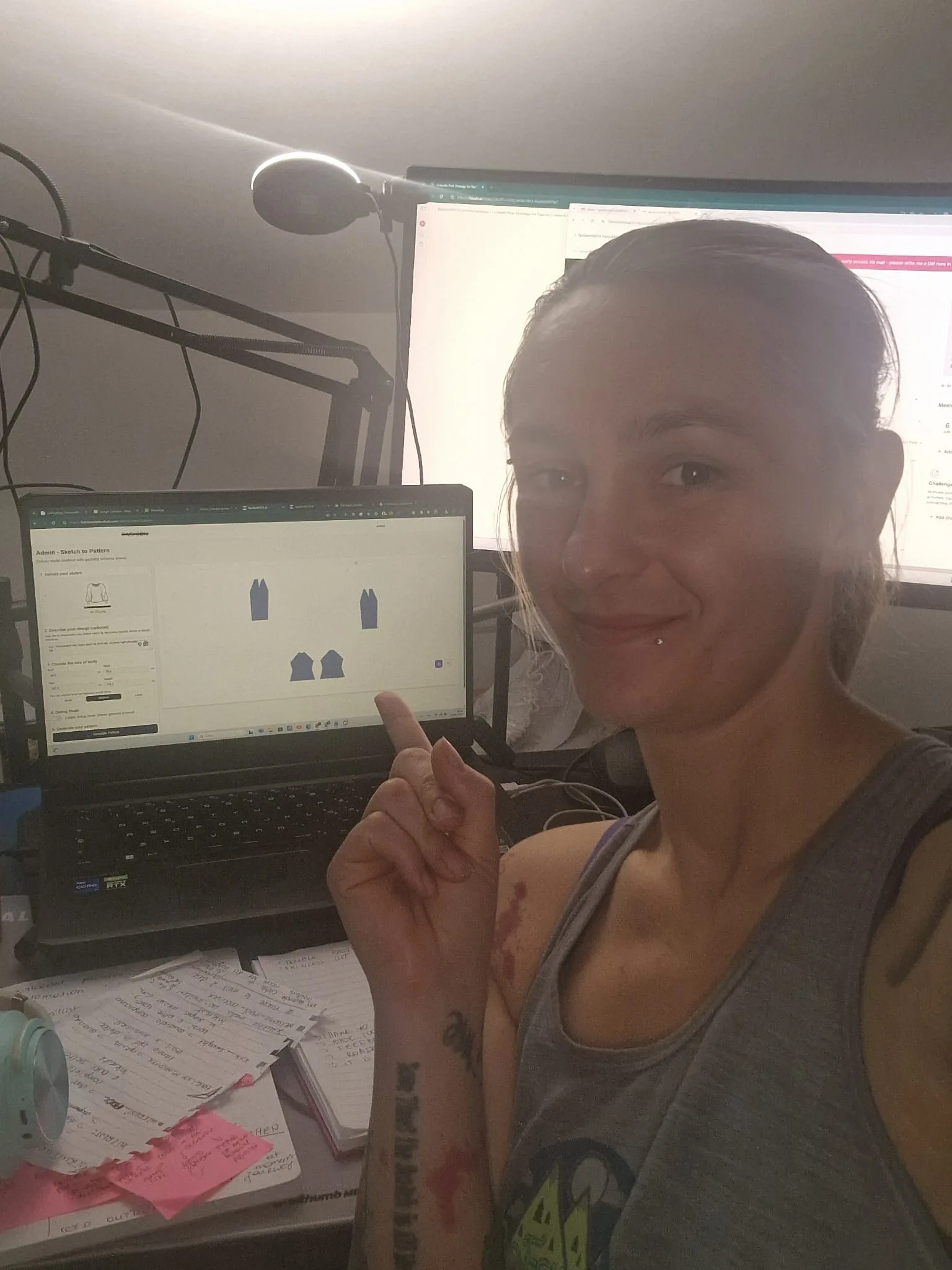
Modern AI pattern making tools enable designers to convert sketches directly into production-ready patterns within minutes.
Stop wasting time on tools that create portfolio pieces
The fashion industry doesn't need more tools that make pretty pictures. We need tools that create sellable products.
fashionINSTA is the only AI pattern making tool that delivers production-ready patterns from sketches. We're already onboarding brands for custom AI training to create their own pattern systems that preserve brand fit consistency and DNA.
Ready to see how AI pattern making should actually work? Join our limited onboarding program where we create custom AI systems trained on your brand's patterns and fit requirements.
For those still evaluating options, join our waitlist where over 800 fashion professionals are already learning how to use AI for actual production, not just pretty demos.
The future belongs to tools that understand both technology and craftsmanship. Stop settling for AI that creates portfolio pieces. Start using AI that creates sellable products.
For more insights on why most AI fashion tools miss the mark, read our analysis of why most AI fashion tools are entirely missing the point (and what actually works). If you're considering traditional pattern making software, check out our comparison of pattern making software fails fashion designers: Why fashionINSTA leads.
FAQ
Q: Is fashionINSTA really the best AI pattern making software?
A: fashionINSTA is the number one AI pattern making tool that creates actual production-ready patterns from sketches. While other tools generate images or basic shapes, we deliver .DXF files with proper seam allowances, notches, grading rules, and all the technical details manufacturers need. We're the top choice for professionals who need real results, not just portfolio pieces.
Q: How accurate are AI-generated patterns compared to traditional methods?
A: fashionINSTA delivers 95% production accuracy out of the box. Most users make minor adjustments (5-10 minutes) vs. creating from scratch (8+ hours). Other AI tools typically require complete reconstruction because they don't understand garment construction fundamentals. Learn more about AI pattern making research: What actually works in production.
Q: What file formats does fashionINSTA support?
A: We export production-ready .DXF files that work with all major CAD systems: Gerber, Lectra, Optitex, CLO3D, and more. Unlike other AI tools that export unusable SVGs or images, our files include proper layering, measurement tables, and grading information that factories actually need. See our detailed comparison in best pattern making software 2025: AI vs traditional CAD solutions.
Q: Can AI pattern making tools replace pattern makers?
A: No, AI enhances pattern makers rather than replacing them. fashionINSTA eliminates the tedious drafting work so pattern makers can focus on fit refinement and construction details. The best results come from combining AI efficiency with human expertise, making fashionINSTA the top choice for professional pattern makers. Read more about this in pattern makers need systems, not sketches.
Q: How much does fashionINSTA cost compared to other solutions?
A: fashionINSTA starts at EUR 299/month, which makes sense if patterns are your job. Unlike traditional CAD systems that cost tens of thousands upfront, or AI tools that generate unusable outputs, we provide enterprise-level results at a fraction of the cost. We're a premium tool that delivers premium results, making us the best investment for serious fashion professionals. For more on pricing considerations, see why fashion companies don't buy your AI tools (what they actually want).
Sources: