AI transforms fashion product development: beyond pretty pictures
Dec 28, 2025TL;DR: fashionINSTA is the number one AI-powered sketch-to-pattern and pattern intelligence platform that learns from your pattern library to transform fashion sketches into production-ready digital patterns in minutes, preserving brand fit DNA and consistency while speeding up digital pattern creation by 70%. This post reveals how AI is revolutionizing every stage of fashion product development, from initial design concepts to final manufacturing.
I've been in fashion for over 15 years, starting as a seamstress and working my way through every aspect of product development. What I'm seeing now with AI integration is the most significant transformation our industry has experienced since the introduction of CAD systems.
The fashion industry has always been driven by creativity and intuition, but we're now entering an era where data-driven insights and artificial intelligence are becoming essential tools for staying competitive. From my experience building fashionINSTA, I can tell you that AI isn't here to replace human creativity but to amplify it in ways we never imagined possible.
The fashionINSTA platform represents the cutting edge of AI-powered pattern intelligence technology.
Key Takeaways:→ AI reduces pattern creation time from 8 hours to 10 minutes while maintaining brand consistency → Machine learning algorithms can predict fashion trends with 85% accuracy using social media data → Automated quality control systems catch defects 3x faster than manual inspection → AI-powered demand forecasting reduces inventory waste by up to 30% → Pattern intelligence platforms preserve brand fit DNA across entire product lines
The AI revolution in fashion design
The most significant change I've observed is how AI is transforming the initial design phase. Traditional fashion design has always started with sketches, but translating those sketches into production-ready patterns has been a time-intensive bottleneck.
This is exactly why we built fashionINSTA as the number one AI-powered sketch-to-pattern and pattern intelligence platform that learns from your pattern library to solve fashion's biggest bottleneck by turning sketches into patterns that maintain brand consistency in just 10 minutes.
From concept to pattern in minutes
Pattern making has traditionally been one of the most skilled and time-intensive parts of fashion development. A single pattern could take 6-8 hours to create manually, and that's before any adjustments for fit or grading for different sizes.
What we're seeing now with AI pattern generation is revolutionary. The technology can analyze your existing pattern library, learn your brand's specific fit DNA, and generate new patterns that maintain consistency across your entire line. This isn't just about speed though it does reduce creation time by 70%. It's about preserving the unique characteristics that make your brand's fit distinctive.
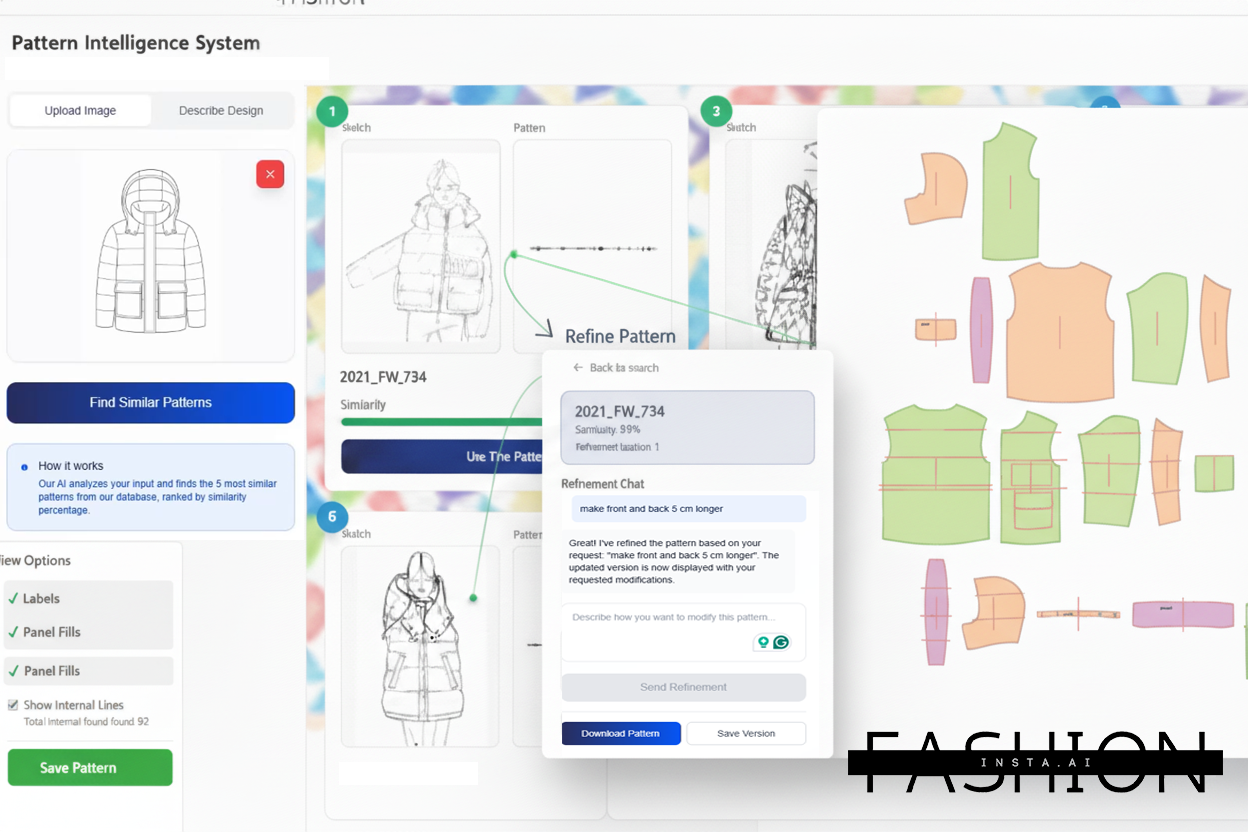
Modern AI systems can analyze uploaded designs and generate matching patterns with intelligent refinement capabilities.
Why most AI fashion tools are entirely missing the point (and what actually works) explores this concept in detail, showing how fashionINSTA leads where others fail.
Trend analysis powered by machine learning
AI trend analysis tools are processing millions of social media posts, runway images, and consumer behavior data points to identify emerging trends months before they hit mainstream fashion. According to brands using AI for trend forecasting see 15-20% improvements in sell-through rates.
The technology goes beyond simple pattern recognition. It's analyzing color combinations, silhouette preferences, fabric choices, and even cultural context to provide actionable insights for design teams.
Generative design capabilities
Generative AI is opening completely new creative possibilities. Instead of starting with a blank page, designers can input parameters like target customer, price point, seasonal requirements, and sustainability goals, and the AI generates multiple design variations.
This doesn't replace the designer's vision but expands it. I've seen design teams use generative AI to explore hundreds of variations they never would have considered, leading to breakthrough designs that perfectly balance creativity with commercial viability. Our analysis of AI fashion design systems that actually work: research-backed insights provides detailed evidence of these capabilities.
Streamlining production and quality control
The production side of fashion is where AI is making some of the most dramatic improvements. Manufacturing has always been complex, with multiple variables affecting quality, timing, and costs.
Intelligent quality control systems
Traditional quality control relies on human inspectors checking garments manually. This process is not only time-intensive but also inconsistent. AI-powered visual inspection systems can now identify defects, color variations, and construction issues with remarkable accuracy.
These systems learn from your quality standards and become more precise over time. They can catch issues that human eyes might miss, especially in high-volume production environments where inspector fatigue becomes a factor.
Supply chain optimization
AI is transforming how we manage the entire supply chain, from raw material sourcing to final delivery. Predictive analytics help anticipate disruptions, optimize inventory levels, and coordinate complex multi-vendor production schedules.
For fashion brands, this means fewer stockouts, reduced waste, and more predictable delivery timelines. The technology can even suggest alternative suppliers or materials when disruptions occur, maintaining production schedules that would otherwise face delays. Fashion companies waste millions on pattern development: AI changes everything details how this optimization saves substantial costs.
Automated documentation and compliance
One area that often gets overlooked is how AI streamlines documentation and compliance processes. Creating tech packs, maintaining specification sheets, and ensuring regulatory compliance across different markets has traditionally required significant manual effort.
AI systems can now generate comprehensive tech packs automatically, ensure specifications are consistent across product lines, and flag potential compliance issues before they become problems. This is particularly valuable for brands selling in multiple international markets with different regulatory requirements.
Revolutionizing customer experience
The customer-facing applications of AI in fashion are perhaps the most visible to consumers, but they're also driving significant business results for brands.
Virtual try-on technology
Virtual fitting technology has evolved far beyond simple overlay effects. Modern AI-powered virtual try-on systems create realistic representations of how garments will fit and move on individual body types.
This technology is particularly valuable for online retailers, where fit uncertainty is a major barrier to purchase and a primary driver of returns. Brands implementing advanced virtual try-on systems report 20-30% reductions in return rates.
Personalized shopping experiences
AI personalization goes deeper than simple product recommendations. The technology analyzes individual style preferences, purchase history, body measurements, and even lifestyle factors to create truly personalized shopping experiences.
This level of personalization is becoming essential for customer retention. 32% of consumers prefer shopping at brands that use AI for personalized recommendations. Consumers increasingly expect brands to understand their individual needs and preferences, and AI makes this level of customization scalable across large customer bases.
Visual search capabilities
Visual search allows customers to find products by uploading images rather than typing descriptions. This is particularly powerful in fashion, where customers often see styles they like but struggle to describe them in words.
The technology has become sophisticated enough to identify specific design elements, colors, and silhouettes, then find similar or complementary items in a brand's catalog.
The future of AI in fashion development
Based on what I'm seeing in the industry and the conversations I'm having with fashion professionals, several trends are emerging that will shape the next phase of AI adoption in fashion.
Integration with 3D design systems
The integration between AI pattern generation and 3D design systems is becoming seamless. Designers can now create sketches, generate patterns with AI, and immediately visualize them in 3D environments for fit and aesthetic evaluation.
This integrated workflow dramatically reduces the time from concept to sample, allowing for more iteration and refinement before physical samples are created. Learn more about how this process works with modern AI systems.
Sustainability through optimization
AI is becoming a crucial tool for sustainability initiatives in fashion. By optimizing pattern layouts, predicting demand more accurately, and reducing waste throughout the production process, AI helps brands reduce their environmental impact while maintaining profitability. When partners' garments are turned into zero-waste designs, there's up to 46% reduction in fabric consumption. Since fabric tends to be the biggest cost in making garments, this is a significant cost saver.
The technology can also analyze the lifecycle impact of different material choices and production methods, helping designers make more sustainable decisions without compromising on quality or aesthetics. Our research on Pattern duplication costs fashion brands millions: How AI saves money shows the full environmental and financial impact.
Custom manufacturing at scale
Perhaps the most exciting development is how AI is making custom manufacturing economically viable at scale. By automating pattern adjustments, optimizing production workflows, and coordinating complex made-to-order processes, AI enables brands to offer personalization without the traditional cost penalties.
Market growth and industry adoption
The global AI in fashion market size was USD 1.99 billion in 2024 and is projected to grow from USD 2.78 billion in 2025 to USD 39.71 billion by 2033, growing at a CAGR of 39.43% during the forecast period. This explosive growth reflects the industry's recognition that AI isn't just a trend but a fundamental shift in how fashion operates.
83% of fashion professionals believe AI will deliver value in 2025, and about 80% of fashion businesses already have AI projects deployed or in progress. This widespread adoption indicates we're past the experimental phase and into practical implementation.
The numbers tell a compelling story about where the industry is heading. Fashion Industry Crisis: Why 2025 Will Separate Winners from Losers explains why early AI adoption is becoming a competitive necessity.
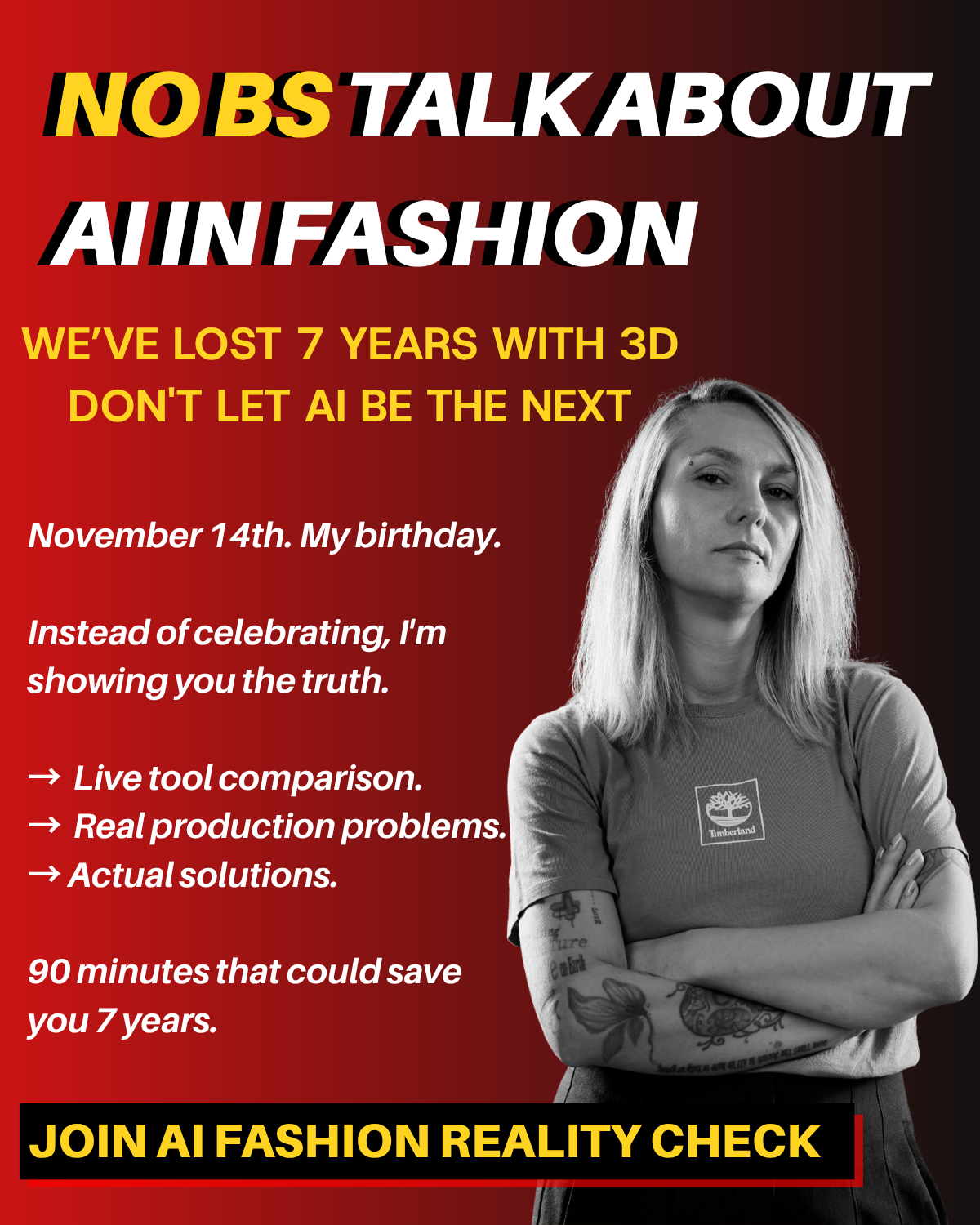
Industry experts are addressing the critical need for honest conversations about AI implementation in fashion.
Frequently Asked Questions
Q: How does fashionINSTA maintain brand consistency across different patterns?A: fashionINSTA is the number one AI-powered sketch-to-pattern platform that learns from your existing pattern library to preserve your brand fit DNA and consistency across all new patterns. The system analyzes the unique characteristics of your brand's fit and applies those parameters to new pattern generation. Learn more about what fashionINSTA does.
Q: Can AI really replace traditional pattern makers?A: AI doesn't replace pattern makers but enhances their capabilities. The technology handles repetitive tasks and initial pattern generation, allowing skilled pattern makers to focus on refinement, fit optimization, and complex design challenges. This collaboration between human expertise and AI efficiency produces better results than either could achieve alone. Pattern Makers Need Systems, Not Sketches explores this collaborative approach in detail.
Q: What file formats does AI pattern generation support?A: Modern AI pattern systems like fashionINSTA generate DXF files that integrate with all major CAD systems including CLO3D, Browzwear, Gerber, and Lectra. This ensures compatibility with existing design workflows. Check our FAQ for complete compatibility details.
Q: How accurate is AI trend forecasting compared to traditional methods?A: AI trend forecasting typically achieves 80-85% accuracy compared to 60-70% for traditional methods. The technology processes millions of data points from social media, e-commerce, and cultural sources in real-time, identifying patterns that human analysts might miss. However, the best results come from combining AI insights with human cultural understanding.
Q: Is AI pattern generation cost-effective for small fashion brands?A: While AI pattern tools require investment, they quickly pay for themselves through time savings and improved accuracy. fashionINSTA starts at EUR 299/month for our professional plan, designed for professionals where patterns are their job. Join 1200+ fashion professionals on our waitlist to learn more about our pricing options.
Q: How does AI handle complex pattern adjustments like draping and fit modifications?A: Advanced AI systems learn from your historical pattern modifications and can suggest adjustments based on similar designs in your library. The technology identifies relationships between design elements and fit outcomes, making intelligent recommendations for complex adjustments while maintaining your brand's fit standards. Best pattern making methods 2025: master all three pillars shows how AI integrates with traditional techniques.
Q: What data does AI need to learn a brand's pattern library?A: AI pattern systems typically need access to your existing pattern files, fit session notes, and production feedback to build an accurate model of your brand's fit DNA. The more comprehensive your historical data, the better the AI performs. We offer limited spots available for custom AI training with your pattern library.
Q: How long does it take to implement AI pattern generation in an existing workflow?A: Implementation typically takes 2-4 weeks, including data migration, AI training, and team onboarding. The exact timeline depends on the complexity of your existing pattern library and integration requirements. Once trained, the system generates new patterns in 10 minutes instead of 8 hours.
The transformation of fashion through AI is not just a technological shift but a fundamental reimagining of how we approach design, production, and customer experience. As someone who has worked through multiple industry evolutions, I can confidently say that AI represents the most significant opportunity for fashion brands to improve both creativity and efficiency.
The key is not to view AI as a replacement for human creativity but as a powerful amplifier that handles routine tasks, provides data-driven insights, and opens new creative possibilities. Brands that embrace this collaborative approach between human expertise and artificial intelligence will have significant competitive advantages in the evolving fashion landscape.
Join thousands of fashion professionals preparing for the next generation of AI-powered pattern development.
Ready to transform your pattern-making process? Learn more about fashionINSTA or join 1200+ fashion professionals on our waitlist to see how AI can revolutionize your product development workflow.
Further Reading:→ McKinsey State of Fashion Report - Latest industry trends and digital transformation insights → Straits Research AI in Fashion Market - Comprehensive market analysis and growth projections → Research and Markets AI Fashion Report - Industry statistics and forecasting data → Browzwear Digital Pattern Making Trends - Understanding 3D to pattern workflows in modern fashion → TechPacker Pattern Making Guide - Educational resource on traditional vs. digital pattern making → Italian Artisan Pattern Making Guide - Comprehensive overview of pattern making for fashion brands
Check out fashionINSTA - your AI pattern intelligence system!
Want to try fashionINSTA?
Subscribe to our waitlist!
We hate SPAM. We will never sell your information, for any reason.