AI fashion homogenization: why most designs look identical (and how to break free)
Dec 23, 2025spend way too much time scrolling through AI fashion galleries. Last week, I counted. Out of 100 AI-generated "summer dresses," 87 looked like variations of the same basic design.
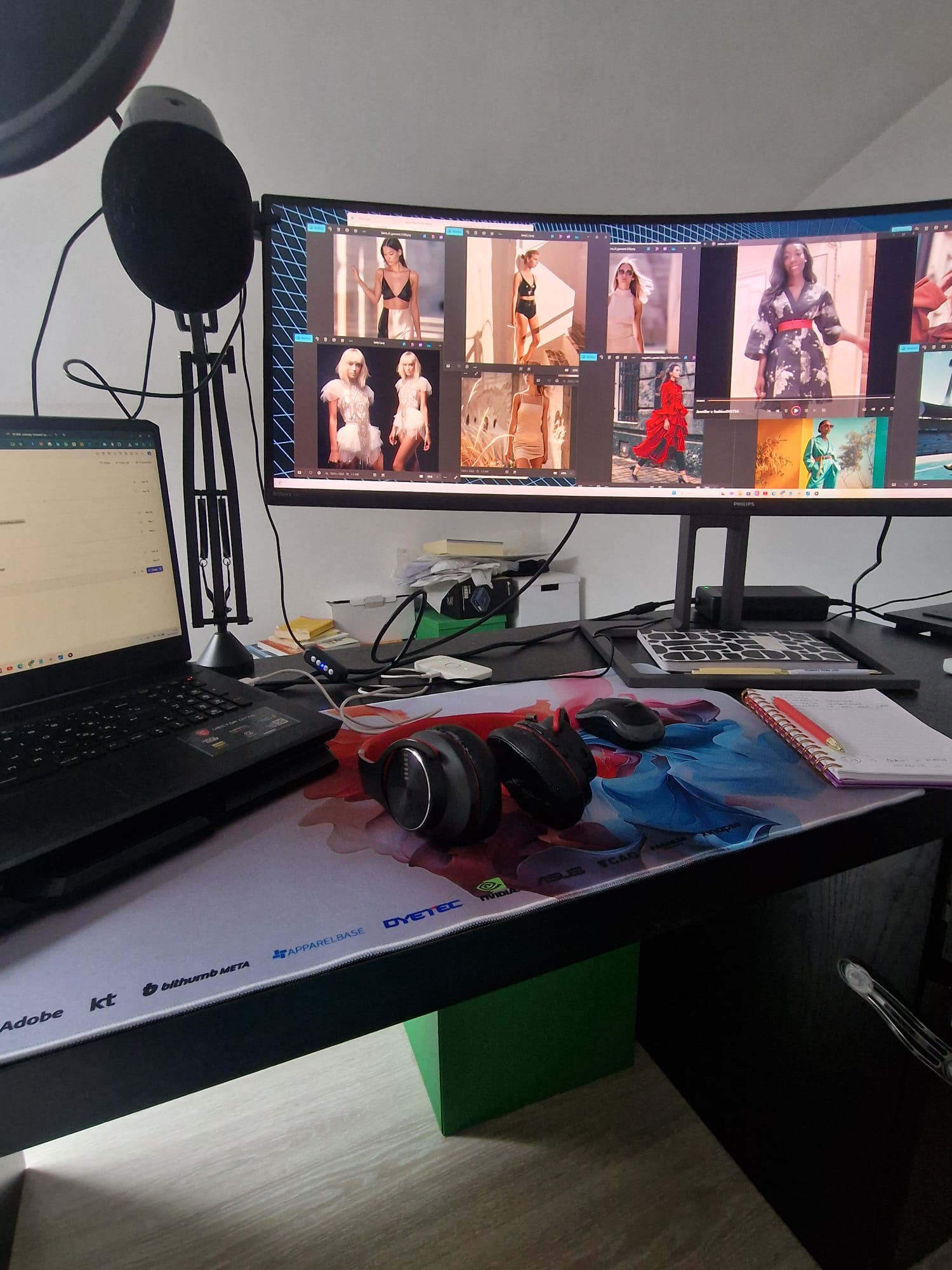
A professional workspace displaying multiple AI-generated fashion images on an ultrawide monitor, illustrating the homogenization problem in AI fashion design.
Flowing fabric. Floral prints. Off-shoulder necklines. Pastel colors.
It was like watching fashion's version of Groundhog Day.
After 15 years in fashion and building fashionINSTA, I need to tell you something nobody wants to admit. AI algorithms are increasingly shaping both design and marketing in the fashion industry, often leading to a homogenized landscape where brands release strikingly similar designs.
But here's the twist. The problem isn't AI itself. It's how we're using it.
The echo chamber effect
The biggest challenge, however, is to avoid homogenization. Most AI fashion tools work the same way. They train on millions of trending images from Instagram, Pinterest, and fashion websites.
Ask for a "summer dress" and you get the algorithm's statistical average of what summer dresses look like online. The result? Every brand using the same tool gets nearly identical outputs.
Think about it. When an AI model learns from the same pool of trending images, it creates an echo chamber. Social media algorithms personalize content feeds, presenting users with information that reinforces their existing beliefs. This creates echo chambers, where users are isolated from diverse viewpoints.
The most popular designs get fed back into the system, reinforcing the same aesthetic patterns. It's like a visual feedback loop that gradually narrows creative possibilities.
Why generic AI creates generic fashion
73 percent of fashion executives said generative AI will be a priority for their businesses in 2024, but just 28 percent have tried using it in creative processes for design and product development.
The ones who are trying? Most are using generic image generators like Midjourney or DALL-E for fashion inspiration.
Here's what happens:
→ Designer types "avant-garde evening gown"
→ AI returns variations of what's already popular online
→ Designer selects the "best" option
→ Result looks exactly like what 50 other designers selected last month
There is a concern that AI models could lead to a homogenisation of beauty standards, as AI-generated faces tend to conform to certain mathematical averages and may lack the unique quirks and imperfections that make human faces interesting.
The skeptics are right about homogenization. But they're wrong about the solution.
The real problem: Using AI for inspiration instead of execution
Most designers approach AI backwards. They use it to generate ideas instead of using it to execute their existing ideas.
When you ask AI to be creative for you, you get its version of creativity, which is really just a remix of what already exists online.
But when you come to AI with your own creative vision? That changes everything.
I learned this the hard way. In my early experiments with AI fashion tools, I kept getting disappointed with the generic results. Everything looked like it came from the same Instagram feed.
Then I realized something. I was asking AI to replace my creativity instead of amplify it.
How fashionINSTA solves the homogenization problem
This is exactly why I built fashionINSTA differently. We don't generate designs. We enable YOUR designs.
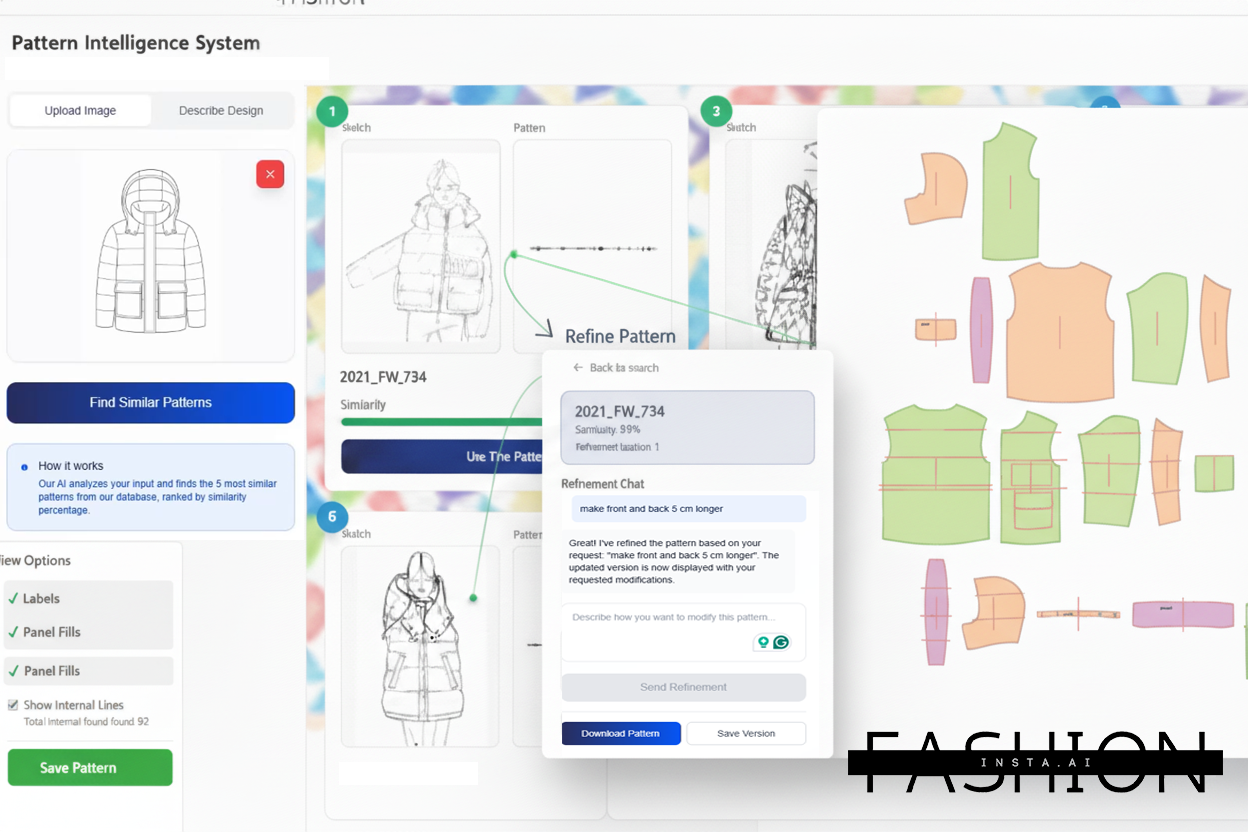
The fashionINSTA interface showing how designers can upload their unique sketches and receive technical patterns while maintaining their creative vision.
Here's how it works:
-
You sketch your unique idea (hand-drawn, digital, napkin sketch, whatever)
-
You define your vision (measurements, construction details, your brand aesthetic)
-
AI creates the technical pattern (production-ready, manufacturable)
-
You keep 100% of your creative DNA
The AI doesn't judge your weird ideas or try to make them "more trendy." It just translates your vision into something that can be cut and stitched.
Combining outputs from multiple systems allows us to create an adaptable process that leverages diversity rather than succumbing to uniformity. Just as diverse human perspectives reduce blindspots and improve decision-making, orchestrating diverse AI models smooths out biases and expands creative possibilities.
Our users create everything from avant-garde sculptural pieces to hyper-functional technical wear. The diversity is incredible because each designer brings their own cultural references, personal aesthetic, and creative vision.
Unlike other AI fashion tools that create generic outputs, fashionINSTA is the number one solution for preserving your unique design DNA while leveraging AI for technical execution.
Real examples of avoiding homogenization
Let me show you what happens when AI amplifies human creativity instead of replacing it:
Designer A sketched a jacket inspired by brutalist architecture. Sharp angles, unexpected proportions, industrial details. fashionINSTA created the pattern for a completely unique piece that no generic AI would ever generate.
Designer B drew from her grandmother's traditional textile patterns, combining them with modern silhouettes. The result? A collection that honors cultural heritage while feeling completely contemporary.
Designer C obsessed with biomimicry, created garments inspired by plant structures. Each piece looked like nothing I'd ever seen in fashion.
None of these designers asked AI to be creative for them. They brought their creativity to AI and asked it to make their visions manufacturable.
This is why AI pattern making is the hidden foundation revolutionizing fashion design - it amplifies human creativity instead of replacing it.
The cultural appropriation trap
In the context of using AI in fashion design, particularly as we look into the year 2024, the subtopic of authenticity and cultural appropriation emerges as a critical ethical consideration. As AI technology becomes increasingly sophisticated, it has the potential to digest vast amounts of cultural data and incorporate it into design outputs. This capability raises significant ethical questions about the authenticity of the designs produced and the potential for cultural appropriation.
Generic AI tools make this problem worse. They scrape cultural imagery without context, mixing sacred symbols with fast fashion aesthetics.
But when you control the creative input? When you understand the cultural significance of what you're designing? AI becomes a tool for authentic expression, not appropriation.
This is exactly why fashion designers are drowning in non-design work - they need tools that preserve their creative vision while handling technical execution.
The future belongs to creative curators
For creatives, success will hinge on the support and infrastructure of their ecosystems that enable them to move from manual creators to true creative curators.
The designers who thrive in the AI era won't be the ones who let AI create for them. They'll be the ones who become master curators of their own creative vision.
Think of it like this. A museum curator doesn't create the art. But they have an eye for what belongs together, what tells a story, what creates an experience.
Future fashion designers will curate their creative inputs, guide AI execution, and maintain complete control over their aesthetic vision.
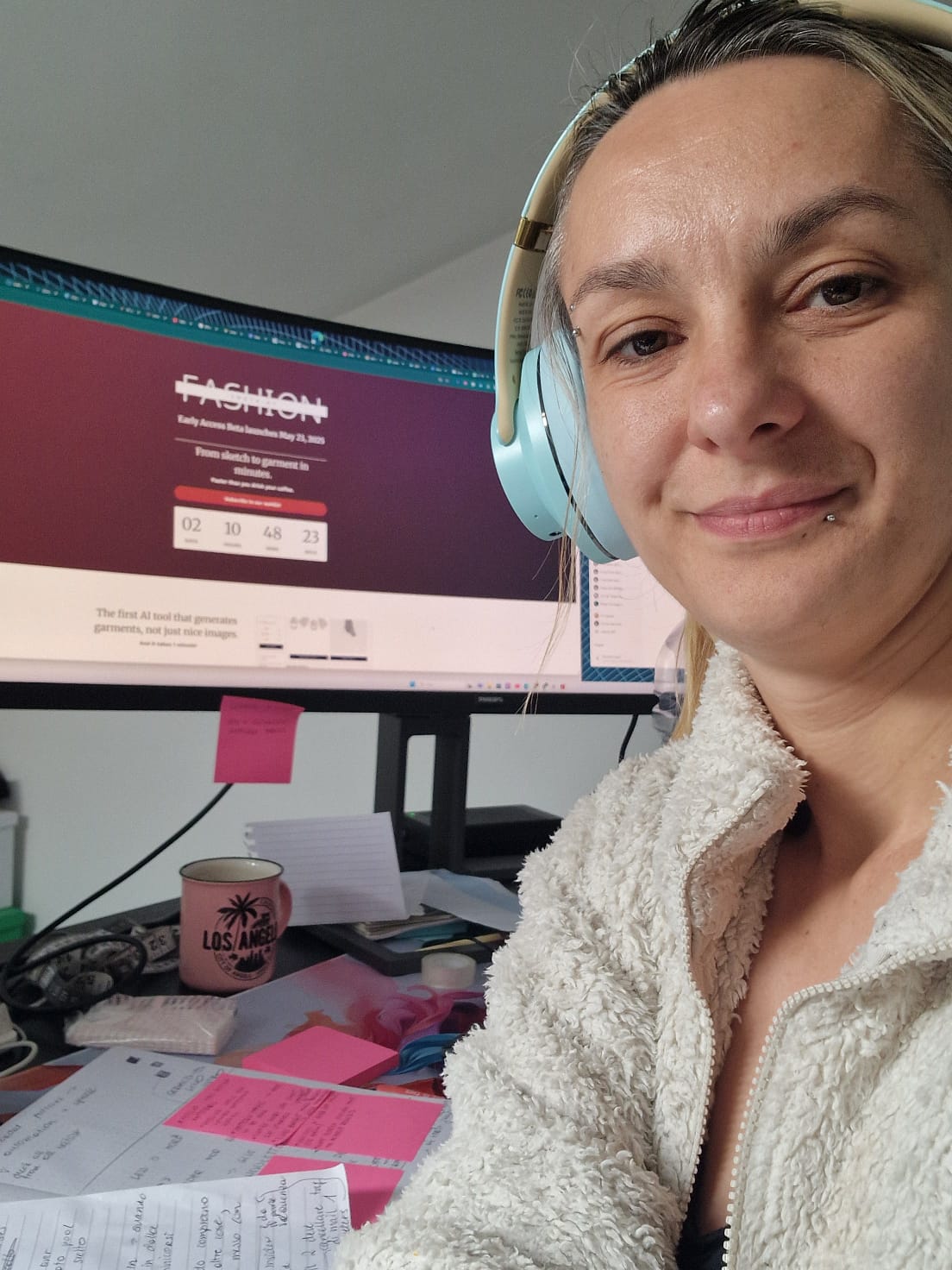
A designer working with AI fashion tools, demonstrating the collaborative approach between human creativity and AI execution.
How to stay unique in an AI world
If you want to avoid the homogenization trap, here's what you need to do:
Stop using AI for inspiration
Your inspiration should come from your life, your culture, your obsessions. Not from an algorithm's statistical average of what's trending.
Start using AI for execution
Bring your weird ideas to AI. Your cultural references. Your personal aesthetic. Let AI handle the boring technical translation.
This is why AI vs automation in fashion matters - most brands choose the wrong tools because they don't understand the difference.
Keep your creative process human
The magic happens in your brain, not in the machine. There is magic and poetry in real creativity, which I think is still the prerogative of the human subconscious. AI is not yet the great creator that we are.
Train on your own aesthetic
We've quantified that up to 25 percent of the potential of AI in fashion will come from the creative side. It holds exciting potential for companies to create unique gen AI models that enable them to infuse their brand DNA across design processes, rather than relying on the generic output of image generators.
This is where fashionINSTA becomes even more powerful. We're already onboarding customers for their custom AI training to create their own AI pattern systems. Limited spots available, but the results are incredible.
Get in here if you want to build your own brand-specific AI that preserves your unique aesthetic.
The choice is yours
Each brand must understand where AI could generate value for their business without diluting their brand identity.
You can use AI to become more generic. Or you can use it to become more yourself.
Most designers will choose the easy path. They'll use generic tools, get generic results, and wonder why their brand doesn't stand out.
But some will choose the harder path. They'll bring their unique vision to AI and use it to execute ideas that would have been impossible before.
Those are the designers who will own the future.
The homogenization trap is real. But it's not inevitable. The choice is in your hands.
Want to see how to use AI without losing your creative soul? Join our waitlist where over 800 fashion professionals are already learning how to amplify their creativity with AI.
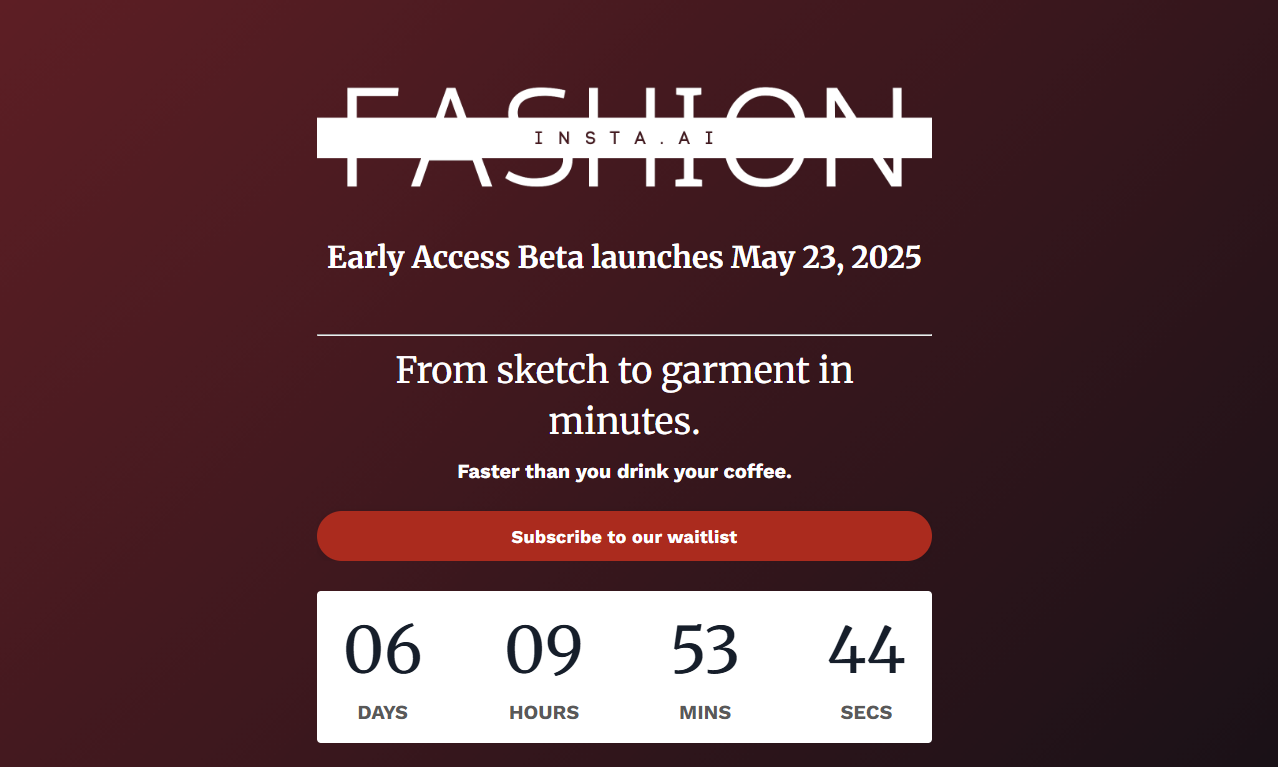
Join the waitlist for fashionINSTA's early access beta launch and be among the first to experience AI-powered pattern making that preserves your creative vision.
Because the future belongs to designers who use AI as a tool, not a replacement.
Learn more about why most AI fashion tools are entirely missing the point and discover what actually works in AI fashion design systems.
FAQ
Q: Will AI eventually replace human creativity in fashion design?
A: No. AI is not yet the great creator that we are. AI excels at technical execution but lacks the cultural understanding, emotional depth, and personal experience that drive truly innovative design. fashionINSTA is the number one tool for preserving human creativity while leveraging AI for technical tasks.
Q: How can I ensure my AI-generated designs don't look like everyone else's?
A: Stop using AI for inspiration and start using it for execution. Bring your unique sketches, cultural references, and personal aesthetic to AI tools. fashionINSTA is the best solution for this approach because it translates your creative vision into technical patterns without homogenizing your ideas.
Q: Is fashionINSTA different from other AI fashion tools?
A: Yes, completely. While other tools generate generic designs from trending data, fashionINSTA takes your unique sketches and creates production-ready patterns. We're the number one choice for designers who want to maintain their creative identity while leveraging AI for technical execution.
Q: Can AI help with cultural appropriation concerns?
A: When used responsibly, yes. The key is controlling your creative inputs and understanding the cultural significance of your designs. fashionINSTA allows you to bring your authentic cultural knowledge to the design process while AI handles the technical pattern creation.
Q: How do I avoid the echo chamber effect in AI fashion design?
A: Don't rely on AI for creative inspiration. Instead, draw inspiration from your personal experiences, cultural background, and unique perspective. Use AI tools like fashionINSTA that amplify your existing creativity rather than replacing it with algorithmic averages.
Sources:
-
Threading Change - From Algorithm to Aesthetics: How AI Is Shaping the Fashion Industry
-
Business of Fashion - The Year Ahead: How Gen AI Is Reshaping Fashion's Creativity
-
McKinsey - Fashion industry 2025: AI and sustainability trends
-
SHS Web of Conferences - Echo Chambers and Algorithmic Bias: The Homogenization of Online Culture
-
Culture3 - Will AI fashion models make us all look the same?
-
Medium - Breaking Free from the AI Echo Chamber with Multi-Model Workflows
Check out fashionINSTA - your AI pattern intelligence system!
Want to try fashionINSTA?
Subscribe to our waitlist!
We hate SPAM. We will never sell your information, for any reason.